


Tire inspection
Inspect your tyres at weekly intervals to ensure maximum mileage while maintaining tyre performance and to ensure compliance with legal requirements. Check your tyres for signs of incorrect inflation pressure and uneven wear. If your tyres are wearing abnormally or unevenly, this may indicate that your wheels may need balancing or front wheel alignment. Refer to the Tyre Tread Wear Chart in this section.
Check your tires at least weekly for cuts, abrasions, bulges, and foreign objects embedded in the tread. More frequent inspections are recommended when the vehicle is regularly used off-road.
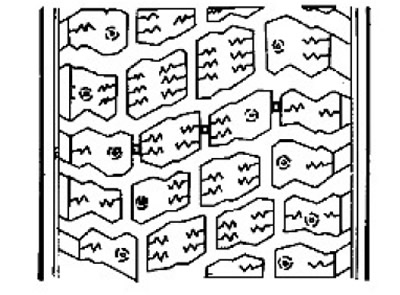
To make it easier to inspect the tires, there are wear indicators at the bottom of the tread grooves, as shown in the picture above.
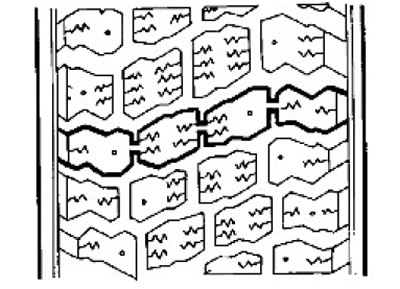
When the tread wear reaches a depth of 1.6 mm, indicators in the form of stripes appear on the surface, connecting the elements of the tread pattern across the width of the tire, as shown in the figure above.
NOTE: DO NOT attempt to rotate tires, such as from front to back, as tread wear varies depending on their position. If tire position is changed after wear has occurred, tire performance will be adversely affected.
NOTE: Local traffic regulations MUST be strictly followed.
When the indicators appear in two or more adjacent grooves, in three places around the circumference of the tire, a new tire should be installed.
Wheel inspection
Check the condition of your wheels regularly. Any wheel that is bent, cracked, dented, or has excessive runout should be replaced.
Inspection of the valve
Check the condition of the inflation valve. Replace any valves that are worn, cracked, loose or leaking.
Tire pressure
Maximum tire mileage and performance will only be achieved if the correct tire pressure is maintained.
Tire pressure should be checked at least once a week, and preferably daily if the vehicle is used off-road.
Tyre inflation pressures are calculated so that the vehicle has satisfactory driving and steering characteristics without adversely affecting the life of the tyre treads. For recommended tyre pressures under all conditions.
For more information, please refer to the chapter: Specifications (204-04 Wheels and Tyres, Specifications).
Be sure to check your tire pressure with an accurate pressure gauge and inflate your tires only to the recommended pressure.
Check and adjust pressure ONLY when tyres are cold, after the vehicle has been parked for three hours or more, or after driving less than 2 miles at speeds below 40 mph (64 km/h). Do not reduce pressure if tyres are hot or the vehicle has driven more than 2 miles at speeds above 40 mph (64 km/h), as pressure may increase by 1 psi (0.41 bar) above cold pressure.
Check the pressure in ALL tires, including the spare. Install the valve caps, as they form a reliable seal and do not allow dust to enter the valve.
Comments on this article