car logo Ford
car logo Volkswagen
car logo BMW
car logo Opel
car logo Audi
car logo Toyota
car logo Peugeot
English Русский
Български
Беларускі
Український
Српски
Hrvatski
Română
Polski
Slovenský
Magyar


Main
Freelander
Discovery
Range Rover
Defender
Contacts
Articles

Description of the car Land Rover Discovery 4, 3, 2 and 1

 
  • Main
  • Discovery
  • Description of the Land Rover Discovery


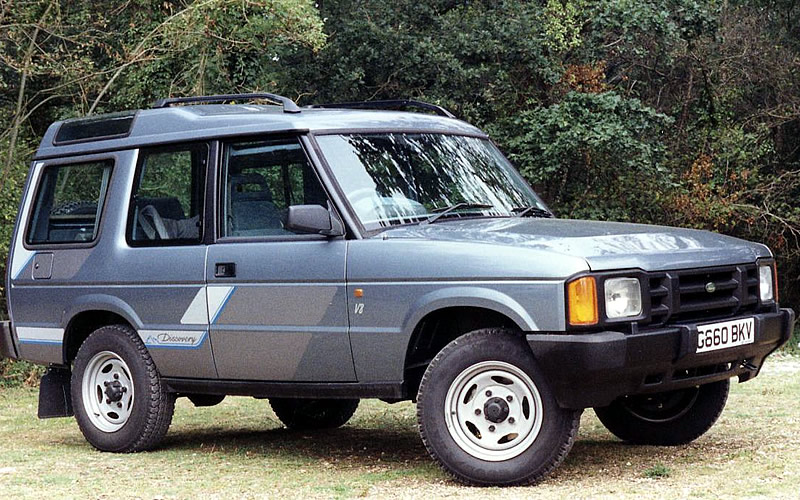
Discovery 3-door 
Discovery 3-door
 
Discovery is an SUV of the British company Land Rover. It was introduced to the world in 1989 as an intermediate link between the top model Range Rover and the all-terrain utilitarian Defender. Discovery very quickly became the most popular model of the Land Rover company. Currently, there are four generations of this car.


Discovery 5-door 
Discovery 5-door
 
First generation Discovery was produced in the period 1989-1998 and were available in both three-door and five-door versions. Initially, there were only three-door cars, but a year later, five-door cars were also produced. There were two more seats in the luggage compartment, meaning that the total capacity of the car was 7 seats.

At first, two types of engines were installed - a 2.5-liter diesel (4 cylinders, in-line, 113 hp) and petrol 3.5 liters (8 cylinders, V-shaped, 166 hp). After 1994, the engine lineup was expanded with two petrol engines - 2.0 liters (4 cylinders, in-line, 134 hp) and 3.9 liters (8 cylinders, V-shaped, 182 hp).
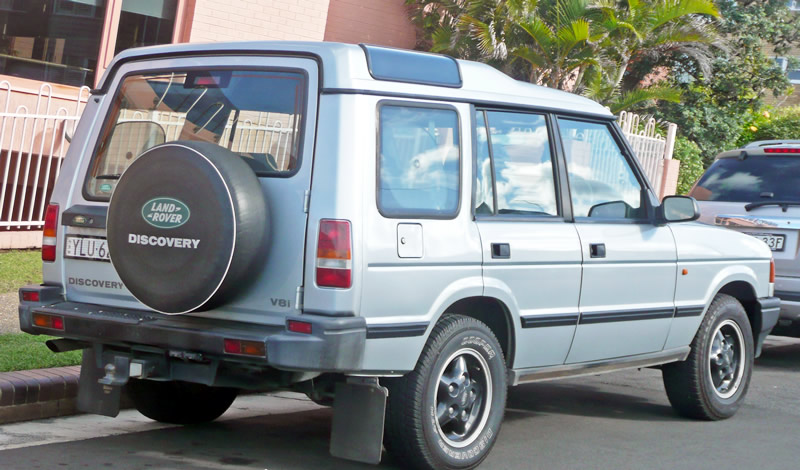
Discovery back view 
Discovery back view
 
An automatic transmission was installed only on the Discovery with a 3.9-liter petrol engine, while the other modifications had a manual transmission. All modifications had all-wheel drive with the ability to manually lock the center differential using the transfer case.

The first Discovery underwent two upgrades. First in 1992, then in 1994. The interior design was changed, the front optics were replaced. It is also interesting that in the period 1992-1995, Discovery was supplied to Japan under the name Honda Crossroad.


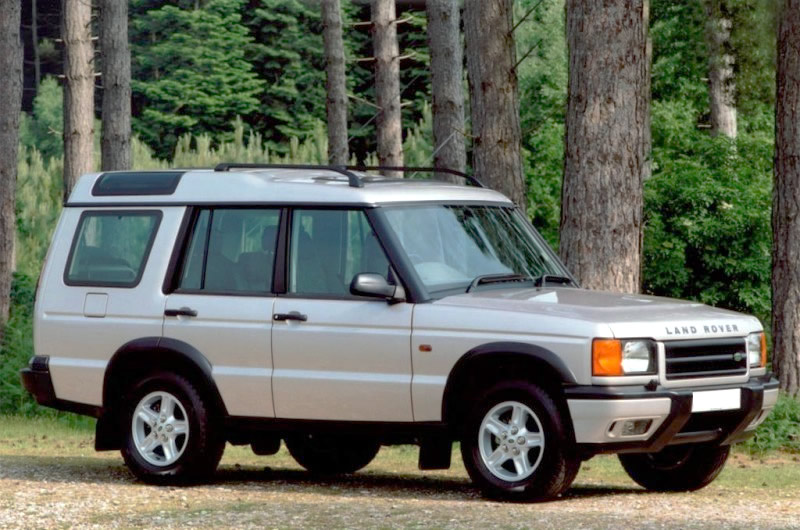
Discovery 2 
Discovery 2
 
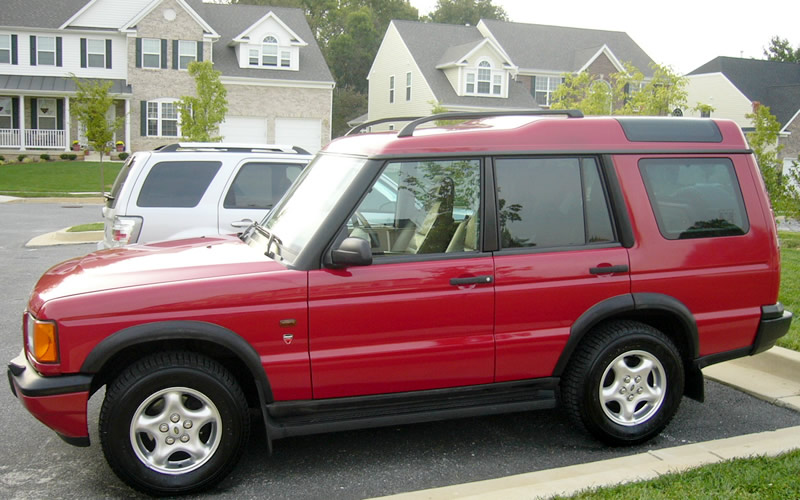
Discovery 2 replaced the first in 1998. The appearance was not very different from its predecessor, but it was a completely different car. Engineers made about 700 changes, although most of them were minor. The car's interior became more comfortable and rich. The luggage compartment became larger, which increased the load on the rear part, which led to a decrease in cross-country ability.

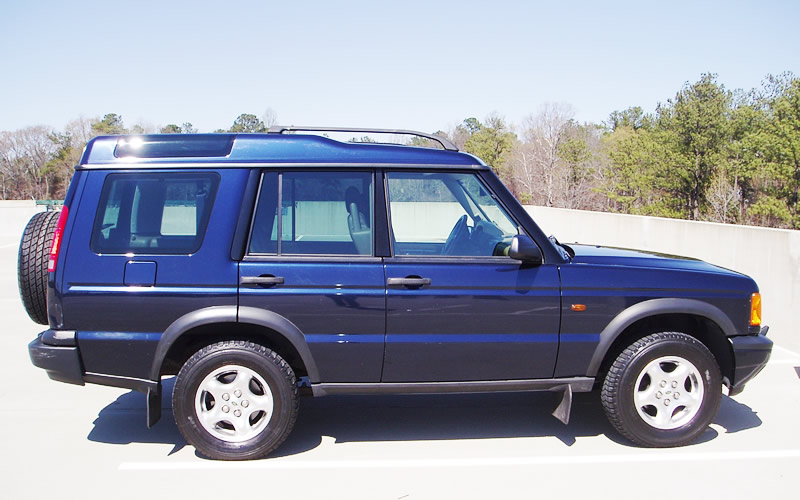
Discovery 2 side view 
Discovery 2 side view
 
The most important change was that the all-wheel drive was now controlled electronically. Many people didn't like this. Some models were equipped with a hydraulic anti-roll bar control system, which reduced roll in corners at speed.

The engines have also been updated. Now Discovery 2 is equipped with only two engines - a 4.0-liter petrol (8 cylinders, V-shaped, 185 hp) and diesel 2.5 liters (5 cylinders, in-line, 138 hp). Both engines were equipped with both automatic and manual transmissions. This generation was produced until 2004.
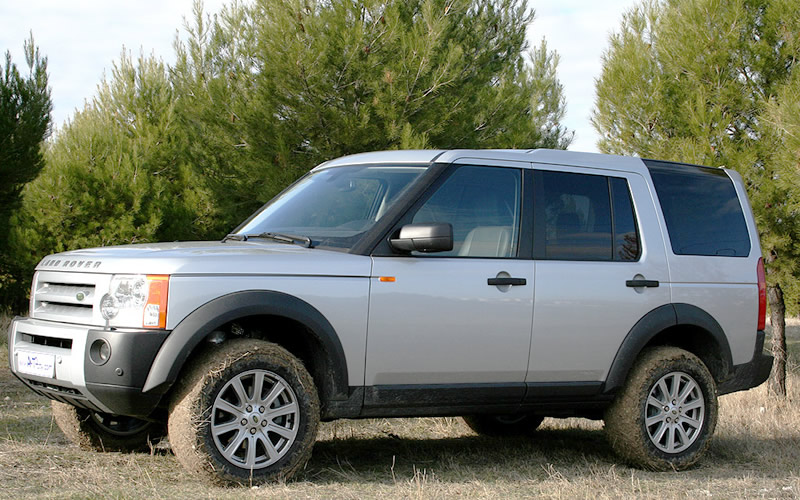

Discovery 3 
Discovery 3
 
In 2004, the generation of this popular SUV changed and to the delight of fans, a Discovery 3. This is a completely new car, which has little in common with its predecessor. They wanted to replace the second generation for a long time, but in 2001 the Range Rover generation changed and this delayed the replacement of Discovery.

One of the biggest changes is the fully independent air suspension. It allows you to change the vehicle's clearance on the go. For example, on the highway it decreases for better control, while off-road, on the contrary, it increases to improve geometric cross-country ability.
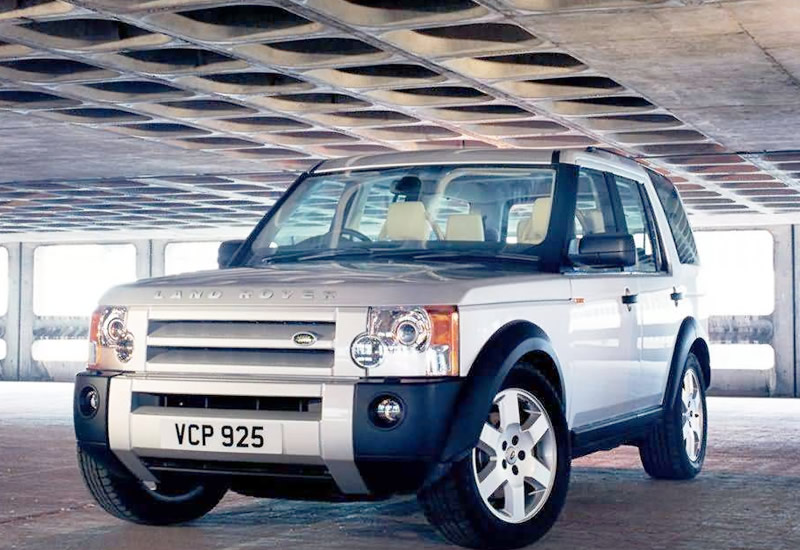
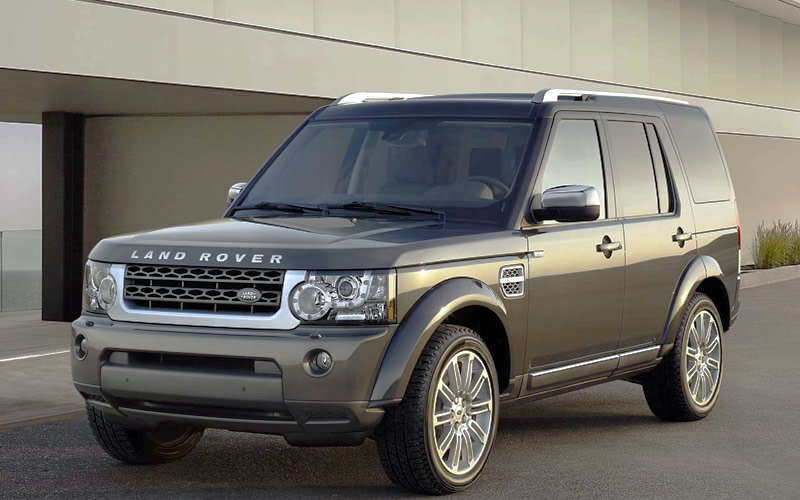
Discovery 3 front view 
Discovery 3 front view
 
The Disco 3 was equipped with three types of engines: a 4.0-liter petrol (6 cylinders, V-shaped, 219 hp), petrol 4.4 liters (8 cylinders, V-shaped, 295 hp) and diesel 2.7 liters (6 cylinders, V-shaped, 200 hp). All cars had an automatic transmission, manual transmission was only available with a diesel engine.

Now electronics completely controlled the traction control system. Anti-skid system, descent control, anti-slip system - all this allows you to confidently drive off-road and not be afraid of either slopes or wet roads.

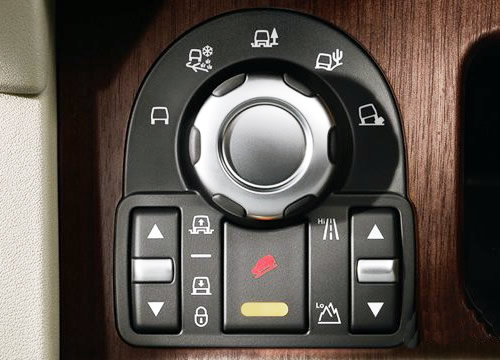
Terrain Response 
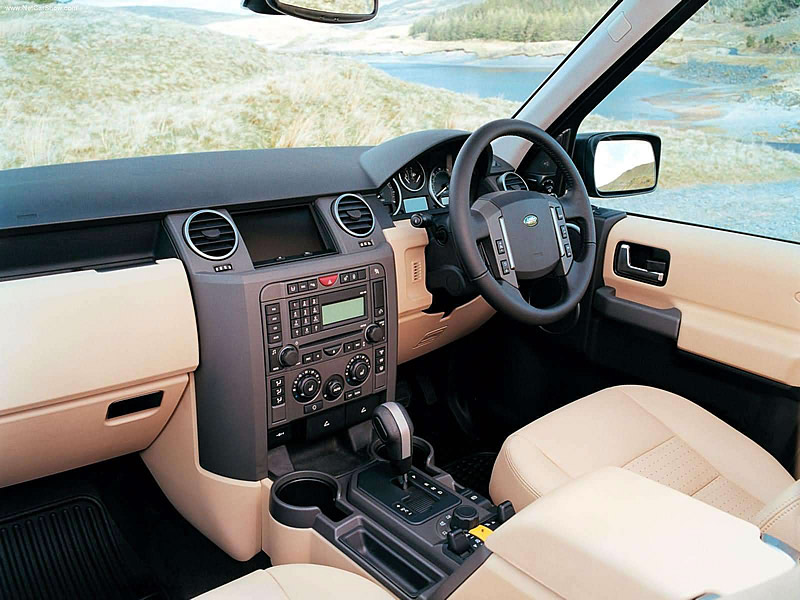
Terrain Response
 
The most important feature of this car was the Terrain Response system developed by Land Rover. Previously, driving a car on difficult off-road terrain required experience, skill and deep knowledge of the car from the driver. With the advent of this system, you select surface types ("mud and ruts", "grass, gravel, snow", "sand") and the computer adjusts the suspension, gearbox, lock modes, which significantly simplifies driving for beginners.

Discovery 3 salon 
Discovery 3 salon
 
The design of the car has changed a lot. The interior has become a full-fledged seven-seater. Now 7 adults can comfortably fit in the car. A navigation system and a DVD player appeared. The car has collected a lot of good reviews, especially after the Top Gear show, when it was used to climb the 307-meter-high Knock-an-Frisdane mountain, where no car had ever been.


Discovery 4 
Discovery 4
 
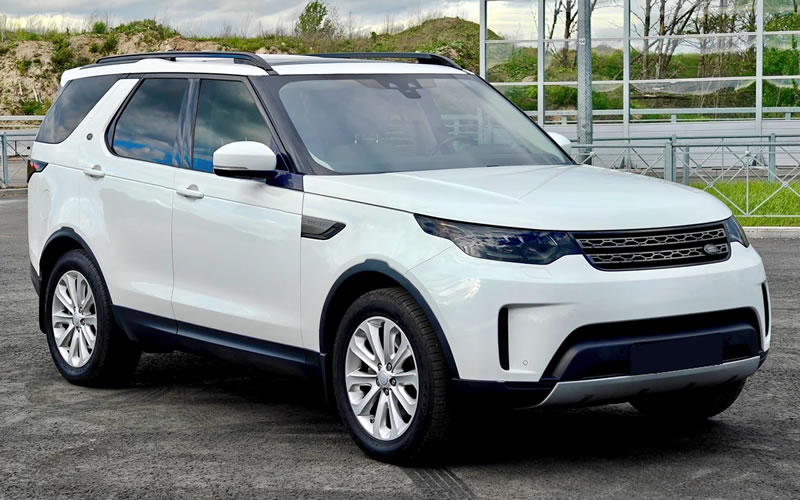
The next generation of this SUV appeared in 2009. Discovery 4 this is most likely an improvement and update of the previous generation. The design of the car has changed, the Terrain Response system has been improved, and many modern automobile "features" invented at that time have been added.

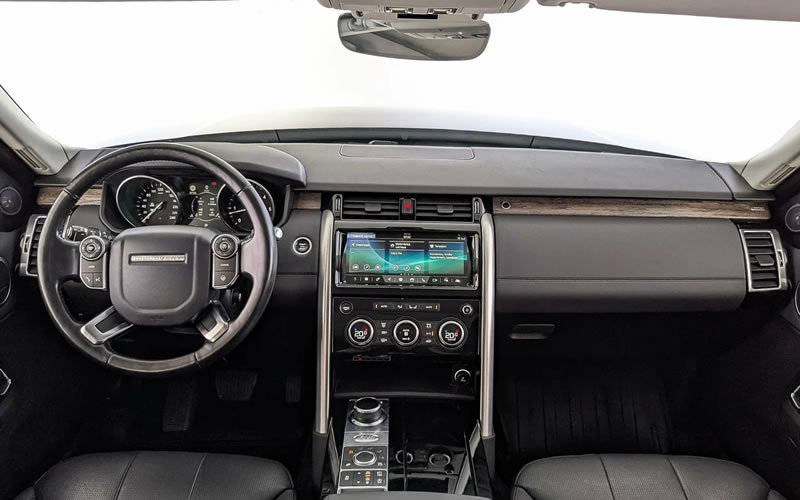
These are technologies such as a system of all-round cameras, adaptive headlights, a touch TFT display, various interfaces for connecting other electronic devices, a modern multimedia system and GPS navigator, etc.
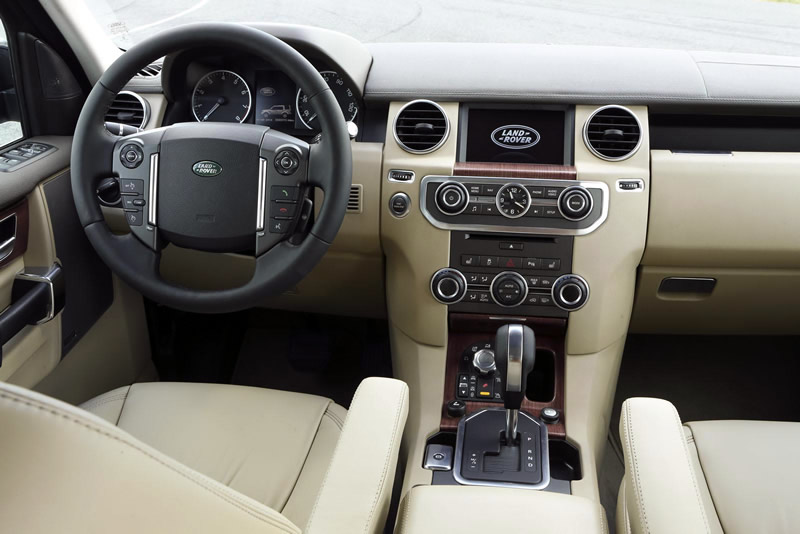
Discovery 4 salon 
Discovery 4 salon
 
Discovery 4 is available with four different engines. Two petrol - 4.0 liters (6 cylinders, V-shaped, 216 hp) and 5.0 liters (8 cylinders, V-shaped, 375 hp) and two 2.7 liter diesel engines (6 cylinders, V-shaped, 190 hp) and 3.0 liters (6 cylinders, V-shaped, 245 hp). All cars are equipped with automatic transmissions. Only the car with a 2.7-liter diesel engine can be purchased with a manual transmission.

Cars with similar characteristics to the Discovery are: Audi Q7, BMW X5, Chevrolet Tahoe, Infiniti QX56, Jeep Grand Cherokee, Lexus GX, Mercedes G-Class, Mitsubishi Pajero, Nissan Patrol, Toyota Land Cruiser Prado, Porsche Cayenne.

Discovery Features


Name Years of production Engine Power Trans- mission Doors
Discovery 1 1989-1998 3.5 / V8 / Petrol 166 hp / 287 Nm Manual transmission 3
3.5 / V8 / Petrol 155 hp / 261 Nm
2.5 / L4 / Diesel 113 hp / 265 Nm
1995-1998 2.0 / L4 / Petrol 134 hp / 312 Nm
2.0 / L4 / Petrol 111 hp / 265 Nm 5
1990-1998 2.5 / L4 / Diesel 113 hp / 265 Nm
3.5 / V8 / Petrol 155 hp / 261 Nm
3.5 / V8 / Petrol 166 hp / 287 Nm
1994-1998 3.5 / V8 / Petrol 182 hp / 312 Nm
3.5 / V8 / Petrol 182 hp / 312 Nm Automatic transmission
           
Discovery 2 1998-2004 2.5 / L4 / Diesel 138 hp / 300 Nm Manual transmission 5
2.5 / L4 / Diesel 138 hp / 300 Nm Automatic transmission
3.9 / V8 / Petrol 185 hp / 340 Nm
4.0 / V8 / Petrol 185 hp / 340 Nm Manual transmission
           
Discovery 3 2004-2009 2.7 / V6 / Diesel 200 hp / 440 Nm Manual transmission 5
2.7 / V6 / Diesel 200 hp / 440 Nm Automatic transmission
4.4 / V8 / Petrol 295 hp / 425 Nm
2005-2008 4.0 / V6 / Petrol 219 hp / 360 Nm
           
Discovery 4 2009-2014 2.7 / V6 / Diesel 190 hp / 440 Nm Manual transmission 5
2.7 / V6 / Diesel 190 hp / 440 Nm Automatic transmission
4.0 / V6 / Petrol 216 hp / 360 Nm
3.0 / V6 / Diesel 211 hp / 520 Nm
3.0 / V6 / Diesel 245 hp / 600 Nm
5.0 / V8 / Petrol 375 hp / 510 Nm


Discovery 3 
  • General information
  • Using the manual
  • Precautionary measures
  • Service Information
  • Technique
  • Health protection
  • Road test
  • Identification codes
  • Jacking and lifting
  • Maintenance - diesel
  • Maintenance - petrol
  • Chassis
  • Suspension
  • Front suspension
  • Rear suspension
  • Wheels and tires
  • Dynamic suspension
  • Cardan shaft
  • Rear drive axle
  • Front drive axle
  • Front axle axles
  • Rear axle axles
  • Brake system
  • Parking brake
  • Hydraulic brake
  • Vacuum brake booster
  • Anti-lock braking system
  • Steering
  • Steering column
  • Power unit
  • Petrol engine 4.0L
  • Petrol engine 4.4L
  • Diesel engine 2.7L
  • Engine cooling
  • Fuel supply
  • Drive units
  • Launch system
  • Ignition system
  • Emission reduction
  • Air filtration
  • Fuel vapor control
  • Electronic control part
  • Car gearbox
  • Clutch
  • All-wheel drive systems
  • Transfer case
  • Exhaust system
  • Fuel tank and lines
  • Acceleration control
  • Electrical equipment
  • Climate control
  • Instruments and control lamps
  • Battery and charging system
  • Information system
  • Lighting and headlights
  • Power distribution
  • Electronic Function Group
  • Body and coating
  • Body elements
  • Interior and body trim
  • Mirrors and glasses
  • Seats
  • Instrument panel and console
  • Handles and locks
  • Windshield wipers and washers
  • Sunroof and bumpers
  • Safety system
  • Body repairs
  • Repair of front end elements
  • Repair of back elements
  • Side panel repair
  • Frame and body mount


LRman.ru © 2013-2026 | Mobile version | Free Lander | Discovery | Range Rover | Defender | Contacts | | Sitemap |
Car repair and service instructions Land Rover: Freelander, Discovery, Range Rover, Defender
We use cookies to make pages load faster and provide a more user-friendly experience 🍪