Inspection and verification
1. Ensure that the customer's complaint is justified.
2. Perform a visual inspection for obvious mechanical or electrical damage.
3. If a clear cause for the problem observed or described by the customer is identified, resolve it before moving on to further action (if possible).
4. If the cause is not visually obvious, check the malfunction symptom and refer to the Malfunction Symptom Table.
Leak Testing Procedure
Introduction
This procedure is designed to make it easier to diagnose and repair leaks on Defender vehicles, ensuring a quality first time fix.
This procedure identifies suspected water intrusion points and provides instructions for recommended remediation.
Prerequisites
It is assumed that the technician working on the vehicle has a minimum qualification of level 3 and, if necessary, standard vehicle protective equipment is used, i.e. protective seat covers, fender covers, etc.
Leakage diagnostics
To effectively detect water leaks, certain basic tools are required. Below are some recommendations.
Basic tools
- Hose
- Water supply source
- Water supply under pressure
- Watering Can Lantern
- Mirror (with telescopic rod)
- Air supply source
- Mandrel (shaped nylon stripping block)
You can use modified tools, such as attaching a watering can sprinkler to a hose to create a sprayer; attach the nozzle of a new can of sealant to the hose, which will make it much easier to supply water to hard-to-reach places; hardware stores also sell ready-made hose tips that can change the spray pattern, and finally, don't forget about using a regular car wash. With the exception of the car wash method, initial diagnosis is more accurate if two technicians are involved: one inside the car and one outside. The technician outside can direct water to areas where leak entry points are likely to be, and the technician inside the car can inspect the inside of the car with a portable 12-volt light to confirm the location of the leak entry point.
It is worth remembering that the place where water appears inside the car may not be the source of the leak, for example, water in the footwell on the passenger side may be coming from the driver's side, flowing behind the trim panel. To find the point of entry of water, it may be necessary to remove the trim or components.
Stains
Often, after a long period of water flow, the entry point can be visually detected by stains or streaks.
Sealing of leaks
There are various substances for sealing leaks, sealing putty, sealing solution or paste. For example, filler produced by Bostik "303 glasticon" и "betafill 10210", which is a white paste and also a transparent sealant "terostat 33".
NOTE: Do not use silicone sealants as they may cause problems if further paint work is required.
Careful consideration must be given to the sealant to be used, for example, an external seam on a white car will require a white or clear sealant, a filler is best for use on hidden surfaces to fill larger gaps. The sealant must be applied so that it looks neat after processing. In the case of using a box profile or under carpet, application and smoothing should not cause problems, however, on external panels or visible areas, the sealant must be "rubbed" into the gap and the excess removed with a suitable solvent that is safe for the paintwork.
Once a water leak has been identified, the suspected area must be thoroughly dried before applying any sealant. Compressed air can make this task easier.
Table of signs of malfunction
Water entry routes and recommended repair procedure.
NOTE: Perform a leak test and visual inspection of any suspicious or wet area. Once a water leak has been located, refer to the troubleshooting table below.
| Sign of malfunction: water accumulation | Potential water seepage points | Action - performed after detecting a water leak |
| In the footwell (seepage point - front) | ||
| In the footwell (leak point - front door area) | ||
| In the footwell (leak point - rear door area) | ||
| In the footwell (bleed point - A-pillar area) | ||
| In the rear luggage compartment/seating area (weep point - lower side/rear body panel) | ||
| In the rear luggage compartment/seating area (weep point - upper side/rear body panel) | ||
| In the rear luggage compartment/seating area (leak point - tailgate) | ||
| In the rear luggage compartment/seating area (seepage point - roof) |
PINPOINT TEST A: HEATER CABLE BUSHING
A1: HEATER CABLE GROOVE
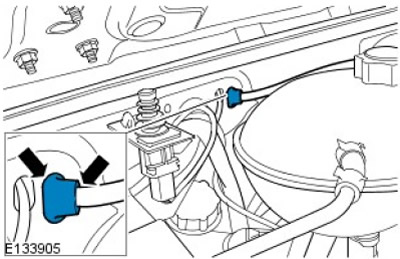
2. Necessary materials: sealant (transparent/in body color), gloves, alcohol wipe.
3. Remove excess sealant from the body.
4. Wait until the sealant hardens and re-test the suspect area for leaks.
Is water still leaking into your car?
Yes - Perform a leak test and visual inspection of any suspect or wet area. Once a water leak has been located, refer to "Water Ingress Paths and Recommended Repair Procedure" above.
No - Replace the previously removed trim/panels or component. Apply sealant around the outer edge of the grommet and to the portion of the grommet that connects to the cable.
PINPOINT TEST B: WINDSHIELD WIPER BUSH
B1: WINDSHIELD WIPER BUSHING
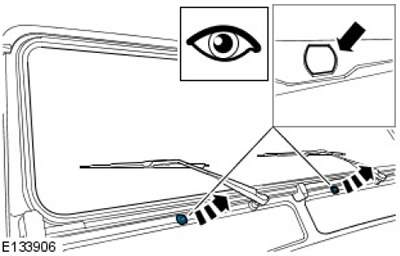
1. Remove the bushings, inspect the bushing and holes for defects/deformation. Apply sealant around the outer edge of the bushing and install it in place.
2. Remove excess sealant from the body.
3. Necessary materials: sealant (transparent or black), gloves, alcohol wipe, cloth.
4. Wait until the sealant hardens and re-test the suspect area for leaks.
Is water still leaking into your car?
Yes - Perform a leak test and visual inspection of any suspect or wet area. Once a water leak has been located, refer to "Water Ingress Paths and Recommended Repair Procedure" above.
No - Reinstall previously removed trim/panels or component.
PINPOINT TEST C: WINDSHIELD SEALING
C1: WINDSHIELD SEAL
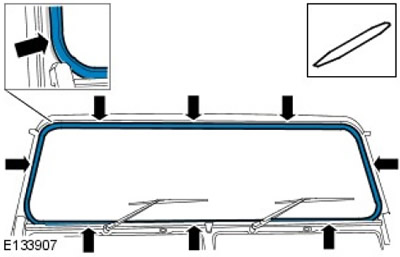
1. Using a mandrel, lift the edge of the windshield seal and insert the tip of the sealant gun. Apply a bead of sealant between the seal and the outer frame.
2. Remove excess sealant from the body.
3. Necessary materials: sealant (transparent/in body color), gloves, alcohol wipe, cloth, mandrel.
4. Wait until the sealant hardens and re-test the suspect area for leaks.
Is water still leaking into your car?
Yes - Perform a leak test and visual inspection of any suspect or wet area. Once a water leak has been located, refer to "Water Ingress Paths and Recommended Repair Procedure" above.
No - Reinstall previously removed trim/panels or component.
PINPOINT TEST D: FOOTWELL SEAM
D1: FOOT SEATS
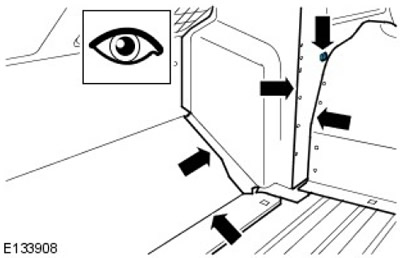
NOTE: The leak may be easier to locate if you place a 12V portable light under the vehicle and inspect inside the vehicle.
1. Lift or remove the carpets. Carefully open the hood and direct the flow of water from the roof over the fascia and under the car. There are several seams in the footwell, any of which can allow water to enter. Also check and seal the grommets and holes in the front of the tunnel if necessary.
2. Apply sealant along the seams and rub it into the joint, wearing a glove first. You can remove the bushings and apply sealant around the outer edge before reinstalling.
3. Necessary materials: sealant (transparent/in body color), gloves, alcohol wipe, cloth.
4. Wait until the sealant hardens and re-test the suspect area for leaks.
Is water still leaking into your car?
Yes - Perform a leak test and visual inspection of any suspect or wet area. Once a water leak has been located, refer to "Water Ingress Paths and Recommended Repair Procedure" above.
No - Reinstall previously removed trim/panels or component.
PINPOINT TEST E: BOTTOM SEAMS
E1: BOTTOM SEAMS
NOTE: The floor panel is secured with screws and foam padding.
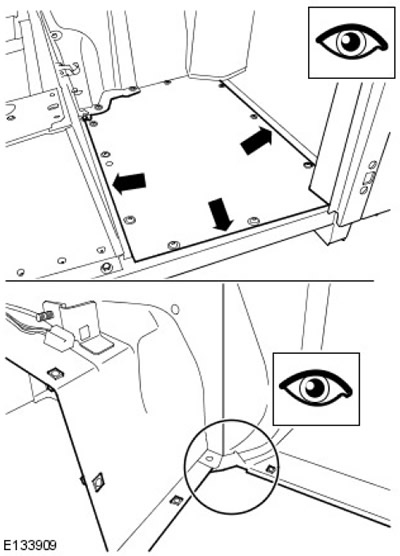
1. Lift or remove the floor mats. Carefully open the hood and direct the flow of water from the roof over the trim panel and under the car.
2. Pay special attention to the corners of the floor panel. If there is an overlap between several panels, apply sealant and rub it into the edges and corners of the overlapped panel. This should prevent further water penetration. If necessary, you can add sealant to the gasket of the removable floor panel.
3. Necessary materials: sealant (transparent/in body color), gloves, alcohol wipe, cloth.
4. Wait until the sealant hardens and re-test the suspect area for leaks
Is water still leaking into your car?
Yes - Perform a leak test and visual inspection of any suspect or wet area. Once a water leak has been located, refer to "Water Ingress Paths and Recommended Repair Procedure" above.
No - Reinstall previously removed trim/panels or component.
PINPOINT TEST F: HOOD LOCK BUSHING
F1: HOOD OPENING LOCK BUSHING
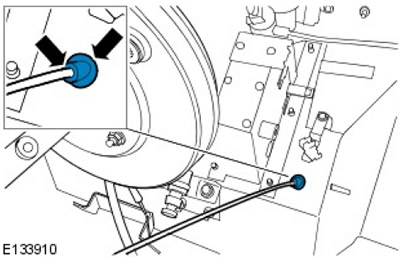
1. Apply sealant around the outer edge of the bushing and to the part of the bushing that connects to the cable.
2. Remove excess sealant from the body.
3. Necessary materials: sealant (transparent/in body color), gloves, alcohol wipe, cloth.
4. Wait until the sealant hardens and re-test the suspect area for leaks.
Is water still leaking into your car?
Yes - Perform a leak test and visual inspection of any suspect or wet area. Once a water leak has been located, refer to "Water Ingress Paths and Recommended Repair Procedure" above.
No - Reinstall previously removed trim/panels or component.
PINPOINT TEST G: PEDAL BLOCK BUSHING
G1: PEDAL BLOCK BUSHING
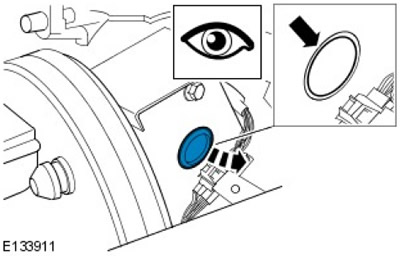
1. Remove the bushing and inspect the bushing and bore for any defects/deformation. Apply sealant around the outer edge of the bushing and reinstall it.
2. Remove excess sealant from the body.
3. Necessary materials: sealant (transparent/in body color), gloves, alcohol wipe, cloth.
4. Wait until the sealant hardens and re-test the suspect area for leaks.
Is water still leaking into your car?
Yes - Perform a leak test and visual inspection of any suspect or wet area. Once a water leak has been located, refer to "Water Ingress Paths and Recommended Repair Procedure" above.
No - Reinstall previously removed trim/panels or component.
PINPOINT TEST H: AIR INTAKE DUCT TO FAN
H1: SUCTION DUCT TO FAN
NOTE: To install the wing, you will need to lower it into place along the face of the trim panel. This will dislodge the foam seal attached to the fan assembly.
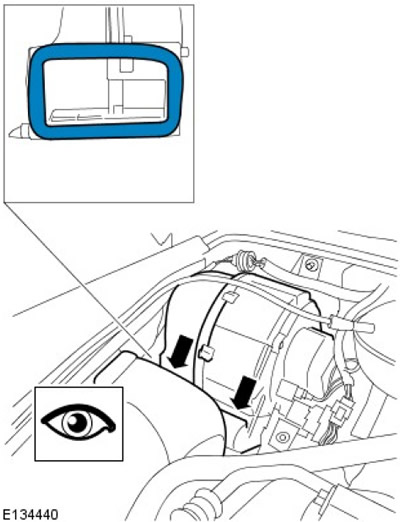
1. Check the condition and position of the foam gasket connection between the air intake duct and the fan unit installed in the trim panel.
2. If possible, apply sealant to the opening with the wing installed.
3. If the opening cannot be sealed with the fender installed, remove the fender to make the repair.
4. Necessary materials: sealant (transparent/in body color), gloves, alcohol wipe, cloth
5. Wait until the sealant hardens and re-test the suspect area for leaks.
Is water still leaking into your car?
Yes - Perform a leak test and visual inspection of any suspect or wet area. Once a water leak has been located, refer to "Water Ingress Paths and Recommended Repair Procedure" above.
No - Reinstall previously removed trim/panels or component.
PINPOINT TEST I: FAN UNIT
I1: FAN UNIT
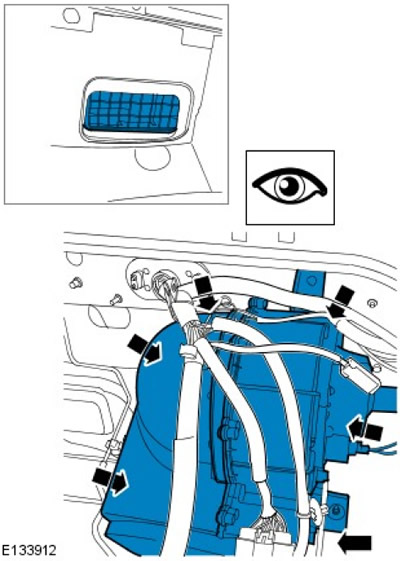
1. Direct water to the fan unit area. If a leak is found and it is possible to pinpoint the specific area of the leak, you can apply sealant to the seam where the fan unit is installed on the bulkhead and wipe off any excess sealant if possible.
2. If the specific leak area cannot be located, the fan assembly must be removed and the foam gasket must be checked for integrity, replace the gasket if necessary, add a thin bead of sealant to the gasket and carefully install it to ensure a tight seal.
3. On some 2007MY models, water may leak through the fan assembly grille into the passenger side footwell. This is caused by a faulty seal between the two halves of the fan assembly. It is recommended that the fan assembly be replaced.
4. Necessary materials: sealant (transparent/in body color), gloves, alcohol wipe, cloth, new gasket, fan unit.
5. Wait until the sealant hardens and re-test the suspect area for leaks.
Is water still leaking into your car?
Yes - Perform a leak test and visual inspection of any suspect or wet area. Once a water leak has been located, refer to "Water Ingress Paths and Recommended Repair Procedure" above.
No - Reinstall previously removed trim/panels or component.
PINPOINT TEST J: AIR INTAKE
J1: AIR INLET DUCT
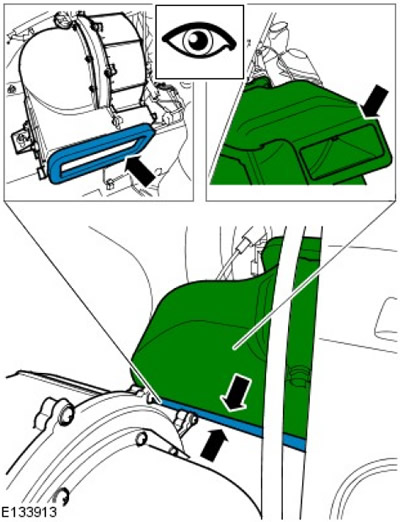
1. Properly prepare the mating surfaces shown in Fig. 1 and Fig. 2. They should be free of waves or damage. Fig. 3 shows the 2 surfaces after installation.
2. To repair minor water leaks, you can apply a bead of sealant to the damaged area and smooth it out.
3. Removal and installation of the wing air duct is shown in Fig. 1. This operation should be performed carefully to ensure a tight mating surface between the air duct and the foam gasket.
4. Necessary materials: sealant (transparent/in body color), gloves, alcohol wipe, cloth.
5. Wait until the sealant hardens and re-test the suspect area for leaks.
Is water still leaking into your car?
Yes - Perform a leak test and visual inspection of any suspect or wet area. Once a water leak has been located, refer to "Water Ingress Paths and Recommended Repair Procedure" above.
No - Reinstall previously removed trim/panels or component.
PINPOINT TEST K: CLUTCH/BRAKE PEDAL UNIT
K1: CLUTCH/BRAKE PEDAL UNIT
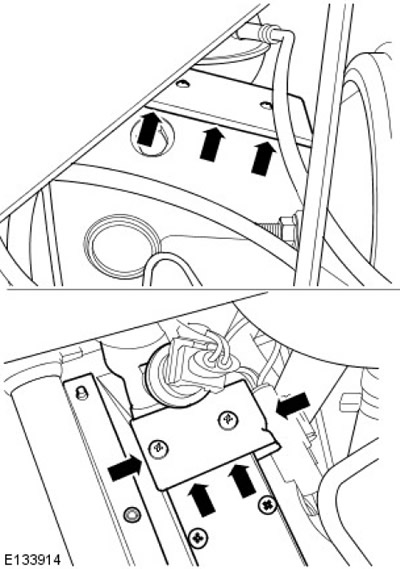
1. Apply sealant to the seams of the pedal block, rub the sealant into the seams.
2. Remove excess sealant from the body.
3. Necessary materials: sealant (transparent or black), gloves, alcohol wipe, cloth.
4. Wait until the sealant hardens and re-test the suspect area for leaks.
Is water still leaking into your car?
Yes - Perform a leak test and visual inspection of any suspect or wet area. Once a water leak has been located, refer to "Water Ingress Paths and Recommended Repair Procedure" above.
No - Reinstall previously removed trim/panels or component.
PINPOINT TEST L: WINDSHIELD FRAME
L1: WINDSHIELD FRAME
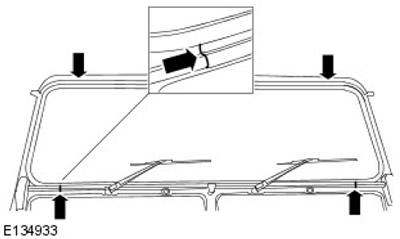
1. Visually inspect the condition of the connection between the side casting and the pressed profile in the middle for pores and cracks at the top and bottom on both sides.
2. If pores and cracks are found, apply sealant to the joint.
3. Necessary materials: sealant (transparent/in body color), gloves, alcohol wipe, cloth.
4. Remove excess sealant from the body.
5. Wait until the sealant hardens and re-test the suspect area for leaks.
Is water still leaking into your car?
Yes - Perform a leak test and visual inspection of any suspect or wet area. Once a water leak has been located, refer to "Water Ingress Paths and Recommended Repair Procedure" above.
No - Reinstall previously removed trim/panels or component.
PINPOINT TEST M: DOOR OPENING SEAL (PATCH)
M1: DOOR OPENING SEAL (PATCH)
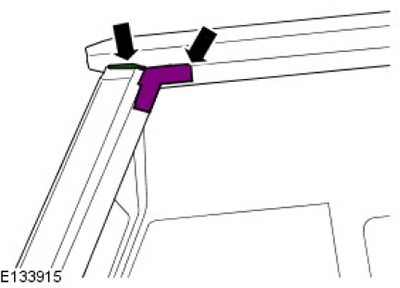
1. Install the L-shaped patch onto the door joint so that the top of the patch is flush with the top of the roof/A-pillar joint (A). After installation, the patch should not be deformed or have any bubbles. Apply a thin bead of sealant approximately 30-50 mm long between the roof and the A-pillar flange. Smooth the sealant onto the flange.
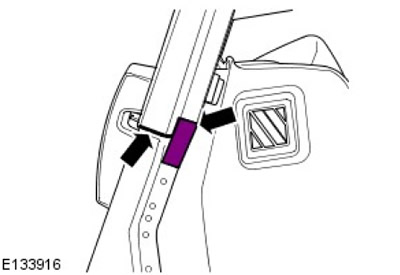
2. Place the patch on the door joint so that it is flush with the flange. The patch should not be deformed and there should be no bubbles on it. Apply a thin bead of sealant approximately 20-40 mm long between the edge of the windshield and the connecting flange of the trim panel. Apply sealant to the joint of the trim panel to the edge of the windshield, ensuring a tight seal. Smooth the sealant onto the flange.
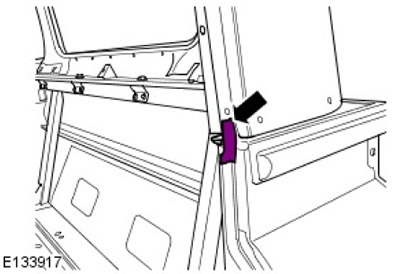
3. Attach the patch to the door joint so that it is flush with the flange. The patch should not be deformed and there should be no bubbles on it. Apply a thin bead of sealant approximately 20-40 mm long to the side and lower body panels. Smooth the sealant onto the flange. Check that there is no gap between the belt seal and the newly applied sealant.
4. Remove excess sealant from the body.
5. Necessary materials: sealant (transparent/in body color), patches on the door joint.
6. Wait until the sealant hardens and re-test the suspect area for leaks.
Is water still leaking into your car?
Yes - Perform a leak test and visual inspection of any suspect or wet area. Once a water leak has been located, refer to "Water Ingress Paths and Recommended Repair Procedure" above.
No - Reinstall previously removed trim/panels or component.
PINPOINT TEST N: WATERPROOF INSERT
N1: WATERPROOF INSERT
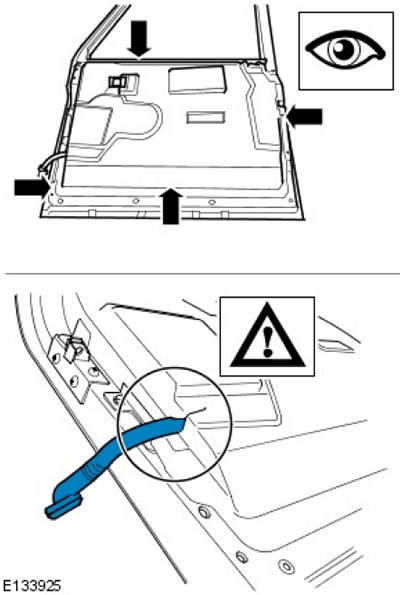
NOTE: Recommendation: Check that the drain holes at the bottom of the door are not blocked by caulk/dirt or debris (if the car was driven off-road).
1. Visually inspect the entire edge of the insert for areas of weak butyl sealant adhesion between the insert and the door panel. Due to the complexity of the corrugated pipe (circular) joint, this area should be carefully inspected as a typical water seepage area. Repairs can be made by rolling or pressing the butyl sealant to improve adhesion or by applying additional sealant/filler to the limited area.
2. Check the condition of the seal under the bottom of the door. If it is damaged or displaced, water may leak through it.
3. Necessary materials: paint roller, sealant, filler
4. Wait until the sealant hardens and re-test the suspect area for leaks.
Is water still leaking into your car?
Yes - Perform a leak test and visual inspection of any suspect or wet area. Once a water leak has been located, refer to "Water Ingress Paths and Recommended Repair Procedure" above.
No - Reinstall previously removed trim/panels or component.
PINPOINT TEST O: LOCK/DOOR EDGE
O1: LOCK/DOOR EDGE
NOTE: Water seepage is noticeable down from the door edge into the A-pillar/footwell/sill area of the vehicle.
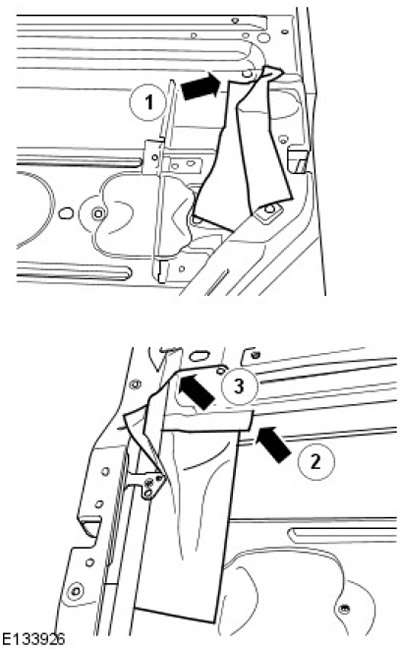
NOTE: Use a mirror and flashlight.
1. Remove the door frame. Remove the waterproof insert to expose the latch mechanism. Check the surface of the waterproof insert of the latch for damage/weak adhesion (Fig. 1).
2. Apply sealant/filler to the top of the latch waterproof insert (Fig. 2).
3. Apply sealant to the mating surfaces of the panel above the waterproof insert of the lock under the door glass guide (Fig. 3).
4. Necessary materials: sealant, filler, tools (to remove the door frame), the waterproof insert needs to be replaced.
5. Wait until the sealant hardens and re-test the suspect area for leaks.
Is water still leaking into your car?
Yes - Perform a leak test and visual inspection of any suspect or wet area. Once a water leak has been located, refer to "Water Ingress Paths and Recommended Repair Procedure" above.
No - Reinstall previously removed trim/panels or component.
PINPOINT TEST P: LOAD COMPARTMENT SEALING LINER
P1: LOAD COMPARTMENT SEALING LINER
NOTE: While it is not necessary to remove the door seal to perform the repair, care must be taken to ensure that all gaps, including the seam seal, are sealed.
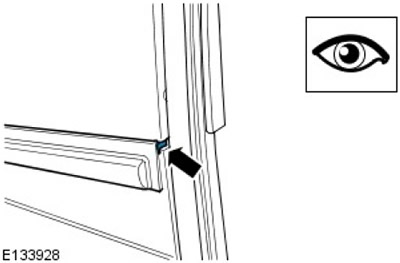
1. Apply a small bead of sealant or filler into the side panel joint weatherstripping (as shown by the arrow).
2. Critical visible area = high quality sealant finish required.
3. Necessary materials: sealant, filler.
4. Wait until the sealant hardens and re-test the suspect area for leaks.
Is water still leaking into your car?
Yes - Perform a leak test and visual inspection of any suspect or wet area. Once a water leak has been located, refer to "Water Ingress Paths and Recommended Repair Procedure" above.
No - Reinstall previously removed trim/panels or component.
PINPOINT TEST Q: UPPER AND LOWER BODY PANEL CONNECTION (SIDE BELT LINE OF THE BODY)
Q1: CONNECTION OF THE UPPER AND LOWER BODY PANELS (SIDE BELT LINE OF THE BODY)
NOTE: Seal between upper and lower body panels (side waist line of the body) made from memory foam, the final layer of seal consists of three sections bonded together, the seal is bonded to the top panel of the body but not bonded to the cargo area.
NOTE: The main area to inspect is the weld seam of the lower weatherstrip. Sometimes the weatherstrip may extend slightly on the inside of the weld, leaving a small cavity. By loosening all the fasteners on the side panel slightly, the weatherstrip can be pushed outward with a plastic tool to close the cavity. If it is a small cavity, it can be sealed with a small amount of sealant, rubbing it into the cavity and wiping off the excess. If the repair is being done on a vehicle where the trim is being done from the inside, the cavity can also be sealed from the inside; more sealant can be applied if the seal will be hidden under the interior trim during normal use.
NOTE: If the seal itself needs to be replaced, the upper quarter panel can be removed without removing the roof panel by removing the upper and lower fasteners and loosening the front and rear fasteners. The roof panel can then be temporarily supported while the quarter panel is removed to facilitate seal replacement.
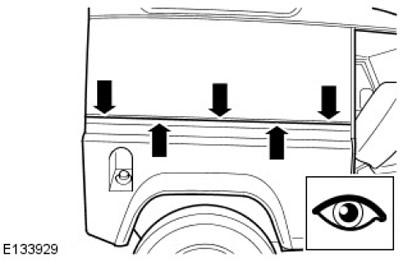
1. When performing this operation, care must be taken not to damage the seal between the roof and the side panel of the body, and ensure that the seal at the front between the windshield frame and the roof does not move during installation.
2. Necessary materials: sealant (transparent or black), gloves, alcohol wipe, cloth, tools, seals (if necessary)
3. Wait until the sealant hardens and re-test the suspect area for leaks.
Is water still leaking into your car?
Yes - Perform a leak test and visual inspection of any suspect or wet area. Once a water leak has been located, refer to "Water Ingress Paths and Recommended Repair Procedure" above.
No - Reinstall previously removed trim/panels or component.
PINPOINT TEST R: ROOF TO FRONT PILLAR (A)
R1: ROOF TO FRONT PILLAR (A)
NOTE: On some vehicles, the gap at the top of the roof is filled with filler. On later model vehicles, the filler was black. Replace with original material.
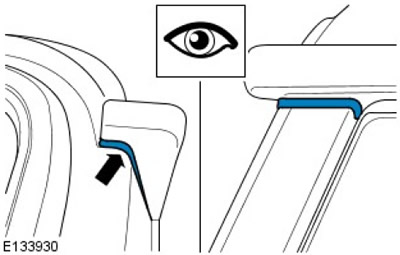
1. Fill gaps with sealant or filler and wipe off excess.
2. In case of leaks above this area - see. (front corner seams) Proceed to AD PINPOINT TEST or (Sealing the drainage channel) Proceed to PINPOINT TEST AE.
3. Necessary materials: sealant (black or white depending on the situation) or filler (black) gloves.
4. Wait until the sealant hardens and re-test the suspect area for leaks.
Is water still leaking into your car?
Yes - Perform a leak test and visual inspection of any suspect or wet area. Once a water leak has been located, refer to "Water Ingress Paths and Recommended Repair Procedure" above.
No - Reinstall previously removed trim/panels or component.
PINPOINT TEST S: ROOF TO TOP PANEL GASKET
S1: GASKET BETWEEN ROOF AND UPPER BODY PANEL
NOTE: Inspect the roof area to ensure the gasket is installed/seated correctly. Check for any lumps/waves or pinching as these are likely causes of water penetration.
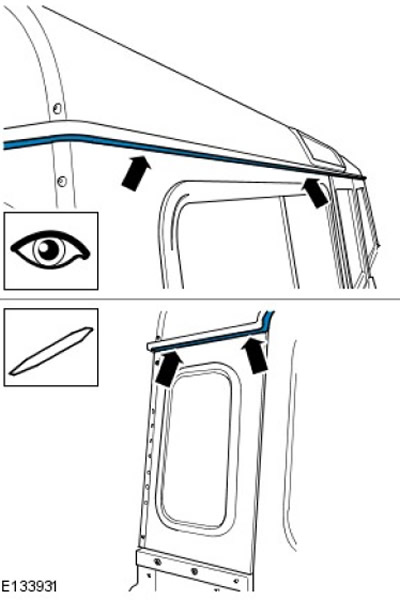
1. Remove/loosen the mounting bolts on the inside of the roof (if necessary, lower the trim to gain access to the fastenings on some versions). When working from the outside, use a non-metallic tool (mandrel) to lift the gasket to ensure proper installation. Tighten the roof fasteners.
2. This procedure does not always require the use of sealant, but if the gasket needs to be additionally sealed with a sealant, a small amount of sealant may be used. Care must be taken when applying the sealant so as not to deform the gasket.
3. Necessary materials: mandrel, tools, sealant.
4. Wait until the sealant hardens and re-test the suspect area for leaks.
Is water still leaking into your car?
Yes - Perform a leak test and visual inspection of any suspect or wet area. Once a water leak has been located, refer to "Water Ingress Paths and Recommended Repair Procedure" above.
No - Reinstall previously removed trim/panels or component.
PINPOINT TEST T: WINDSHIELD HINGE
T1: WINDSHIELD HINGE
NOTE: On vehicles prior to 2009 model year, or if there is a significant leak around this area, it may be advisable to apply sealant along the joint between the trim panel and the windshield edge before installing the hinge in place.
NOTE: Critical visible area = high quality sealant finish required.
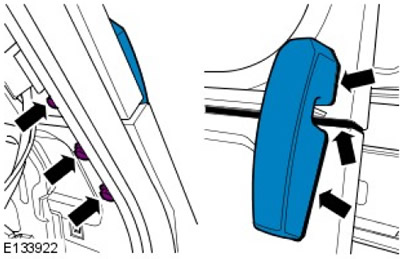
1. From inside the vehicle, remove the 3 fasteners holding the windshield hinge. Remove the hinge. Remove the existing gasket and clean off any remaining adhesive or sealant. Reinstall the hinge gasket. Apply a small amount of sealant around each fastener hole.
2. Necessary materials: sealant, windshield hinge gasket.
3. Wait until the sealant hardens and re-test the suspect area for leaks.
Is water still leaking into your car?
Yes - Perform a leak test and visual inspection of any suspect or wet area. Once a water leak has been located, refer to "Water Ingress Paths and Recommended Repair Procedure" above.
No - Reinstall previously removed trim/panels or component.
PINPOINT TEST U: MAIN HARNESS BUSHING
U1: MAIN HARNESS BUSHING
NOTE: Inspect the bushing for areas of poor fit.
NOTE: Check the U-channel to the trim panel for distortion between the weld spots where water is leaking into the sleeve.
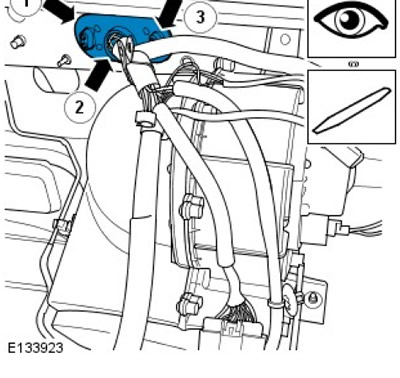
1. Use a drift to properly install the bushing. Additional sealant should be applied around the outer edges of the bushing and body panel.
2. In some cases, the main harness clamp may need to be sealed together with the outer part of the bushing. This is determined during the re-inspection.
3. Necessary materials: sealant, mandrel.
4. Wait until the sealant hardens and re-test the suspect area for leaks.
Is water still leaking into your car?
Yes - Perform a leak test and visual inspection of any suspect or wet area. Once a water leak has been located, refer to "Water Ingress Paths and Recommended Repair Procedure" above.
No - Reinstall previously removed trim/panels or component.
PINPOINT TEST V: AIR CONDITIONER PIPE BUSHING
V1: AIR CONDITIONER PIPE BUSHING
NOTE: Inspect the bushing for areas of poor fit.
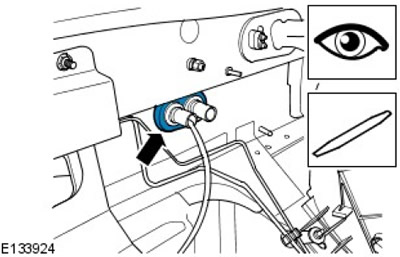
1. Use a drift to properly install the bushing. Additional sealant should be applied around the outer edges of the bushing and body panel.
2. Necessary materials: sealant, mandrel.
3. Wait until the sealant hardens and re-test the suspect area for leaks.
Is water still leaking into your car?
Yes - Perform a leak test and visual inspection of any suspect or wet area. Once a water leak has been located, refer to "Water Ingress Paths and Recommended Repair Procedure" above.
No - Reinstall previously removed trim/panels or component.
PINPOINT TEST W: RIVETS IN THE SIDE PANEL OF THE BODY
W1: RIVETS IN THE SIDE BODY PANEL
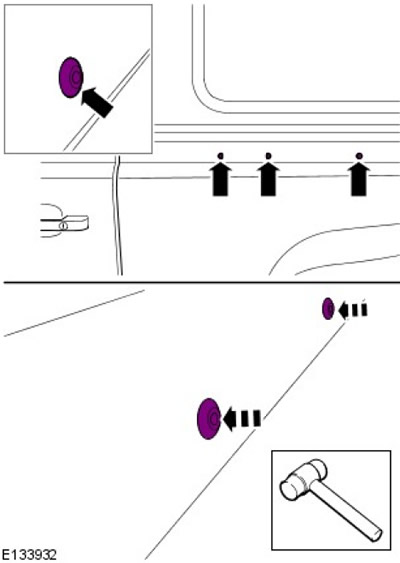
1. Apply sealant around the rivet and wipe off excess with an alcohol wipe; the rivet can also be installed by tapping it lightly with a mallet through a nylon block.
2. If the leak is not fixed, the rivet must be drilled out and replaced, then painted with paint for minor paintwork repair.
3. Necessary materials: sealant (transparent/in body color), gloves, alcohol wipe, cloth, hammer, nylon block, rivet, riveting gun, paint for minor paintwork repairs.
4. Wait until the sealant hardens and re-test the suspect area for leaks.
Is water still leaking into your car?
Yes - Perform a leak test and visual inspection of any suspect or wet area. Once a water leak has been located, refer to "Water Ingress Paths and Recommended Repair Procedure" above.
No - Reinstall previously removed trim/panels or component.
PINPOINT TEST X: TAIL LIGHTS/REAR BODY SEALING
X1: REAR POSITION LIGHTS/REAR BODY SEALING STRIP
[Information obtained from the website: www.lrman.ru]
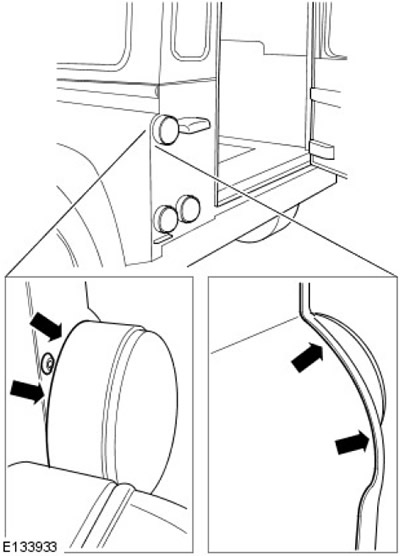
1. To seal the back seam, press the sealant into the seam and then smooth it into the gap, rub the sealant into the joint and remove excess with a cloth dampened with alcohol.
2. To seal the tail light, remove the tail light and apply sealant to the circumference of the base of the light, reinstall the light and wipe off excess sealant.
3. Necessary materials: sealant (transparent/in body color), gloves, cloth soaked in alcohol.
4. Wait until the sealant hardens and re-test the suspect area for leaks.
Is water still leaking into your car?
Yes - Perform a leak test and visual inspection of any suspect or wet area. Once a water leak has been located, refer to "Water Ingress Paths and Recommended Repair Procedure" above.
No - Reinstall previously removed trim/panels or component.
PINPOINT TEST Y: UPPER REAR SIDE BODY PANELS CORNERS
Y1: REAR SIDE BODY UPPER CORNERS
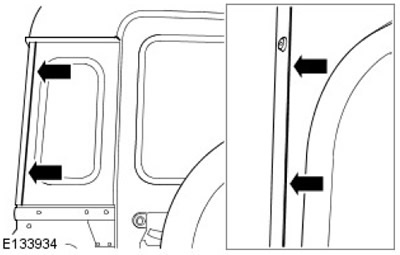
1. Press the sealant into the seam, smooth it into the gap, and remove any excess.
2. Necessary materials: sealant (transparent/in body color), gloves, alcohol wipe, and cloth.
3. Wait until the sealant hardens and re-test the suspect area for leaks.
Is water still leaking into your car?
Yes - Perform a leak test and visual inspection of any suspect or wet area. Once a water leak has been located, refer to "Water Ingress Paths and Recommended Repair Procedure" above.
No - Reinstall previously removed trim/panels or component.
PINPOINT TEST Z: JOINTING THE UPPER AND LOWER BODY PANELS (REAR BELT LINE OF THE BODY)
Z1: CONNECTION OF THE UPPER AND LOWER BODY PANELS (REAR BELT LINE OF THE BODY)
NOTE: Seal between upper and lower body panels (side waist line of the body) made from memory foam, the final layer of seal consists of three sections bonded together, the seal is bonded to the top panel of the body but not bonded to the cargo area.
NOTE: Sometimes the seal may extend slightly to the inside of the seam, leaving a small cavity. By loosening all the fasteners on the side panel slightly, you can use a plastic tool to push the seal outward to close the cavity. If it is a small cavity, it can be sealed with a small amount of sealant, rubbing it into the cavity and wiping off the excess. If the repair is being done on a vehicle where the trim is being done from the inside, the cavity can also be sealed from the inside; more sealant can be applied if the seal will be hidden under the interior trim during normal use.
NOTE: If the seal itself needs to be replaced, the upper quarter panel can be removed without removing the roof panel by removing the upper and lower fasteners and loosening the front and rear fasteners. The roof panel can then be temporarily supported while the quarter panel is removed to facilitate seal replacement.
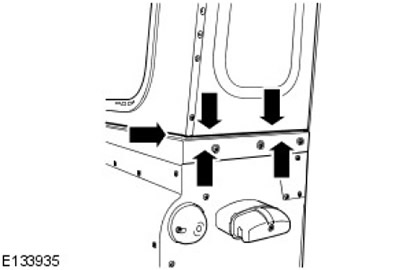
1. When performing this operation, care must be taken not to damage the seal between the roof and the side panel of the body, and ensure that the seal at the front between the windshield frame and the roof does not move during installation.
2. Necessary materials: sealant (transparent or black), gloves, alcohol-soaked cloth, removal tools (if necessary), seals (if necessary).
3. Wait until the sealant hardens and re-test the suspect area for leaks.
Is water still leaking into your car?
Yes - Perform a leak test and visual inspection of any suspect or wet area. Once a water leak has been located, refer to "Water Ingress Paths and Recommended Repair Procedure" above.
No - Reinstall previously removed trim/panels or component.
PINPOINT TEST AA: REAR DOOR
AA1: REAR DOOR
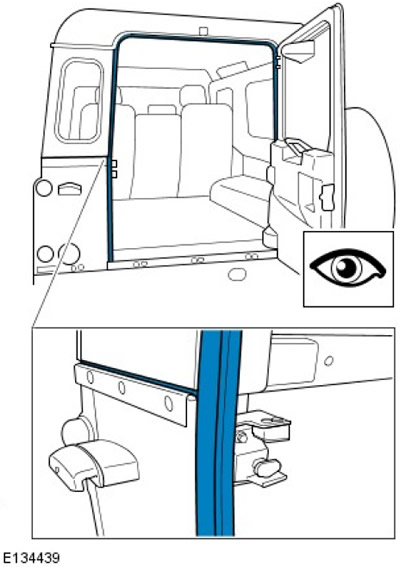
NOTE: Due to the location of the spare wheel, the tailgate may move relative to the body due to loose fasteners. Check/adjust tightening torque to 22 Nm (plus or minus 3 Nm).
1. Check the profile and adjustment/installation position of the rear door. Adjust if necessary.
2. Check the area of the door seal with bubbles for cracks due to door displacement.
3. Check the condition, correct installation and reliability of the sealing of the opening. Replace if necessary.
4. Check the quality of the patches and sealant in the waist seam area (see instructions related to belt line seal repair).
5. Necessary materials: sealing the opening (replace if necessary), sealant (transparent/in body color), gloves, a cloth soaked in alcohol, paint for minor paintwork repairs.
6. Wait until the sealant hardens and re-test the suspect area for leaks.
Is water still leaking into your car?
Yes - Perform a leak test and visual inspection of any suspect or wet area. Once a water leak has been located, refer to "Water Ingress Paths and Recommended Repair Procedure" above.
No - Reinstall previously removed trim/panels or component.
PINPOINT TEST AB: ROOF SEAM
AB1: ROOF SEAM
NOTE: Excess sealant must be completely removed from clearly visible areas, leaving no signs of repair.
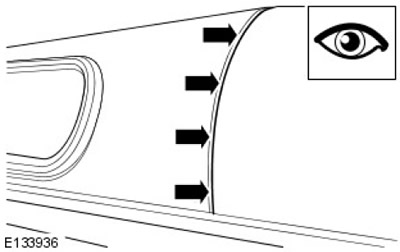
1. Visually inspect the entire roof seam for flange edge defects. Check for gaps between panels and the condition of panel joints. Apply sealant if necessary.
2. Necessary materials: sealant (preferably in body color or transparent), cloth, alcohol wipe, gloves.
3. Wait until the sealant hardens and re-test the suspect area for leaks.
Is water still leaking into your car?
Yes - Perform a leak test and visual inspection of any suspect or wet area. Once a water leak has been located, refer to "Water Ingress Paths and Recommended Repair Procedure" above.
No - Reinstall previously removed trim/panels or component.
PINPOINT TEST AC: ALPINE HEADLIGHTS
AC1: ALPINE HEADLIGHTS
NOTE: Excess sealant must be completely removed from clearly visible areas, leaving no signs of repair.
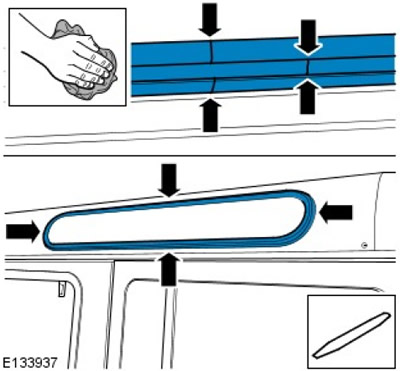
1. Gasket joint leaking - Apply black sealant between the edges of the gasket joint.
2. Leakage between the gasket and the roof - Due to the design of the gasket, leakage in this area is unlikely. Leakage is probably caused by deformation of the gasket, which should be visible upon visual inspection. The gasket should be reinstalled and re-inspected before completing the repair. Using a drift, carefully lift the outer edge of the gasket seal. When working in the area of the Alpine headlights, lift the edge and apply sealant between the gasket and the roof panel. This operation must be carried out carefully so as not to damage or scratch the roof while sealing the Alpine headlights.
3. In case of leakage through the center (in the stitching zone) apply sealant between the joints and wipe off excess.
4. Necessary materials: sealant (transparent/ black), mandrel, cloth, alcohol wipe, gloves.
5. Wait until the sealant hardens and re-test the suspect area for leaks.
Is water still leaking into your car?
Yes - Perform a leak test and visual inspection of any suspect or wet area. Once a water leak has been located, refer to "Water Ingress Paths and Recommended Repair Procedure" above.
No - Reinstall previously removed trim/panels or component.
PINPOINT TEST AD: FRONT CORNER SEAMS
AD1: FRONT CORNER SEAMS
NOTE: The arrow shows the area where cracks typically appear on the front of the roof (small cracks).
NOTE: Recommendation: It may be necessary to use paint for minor paintwork repairs.
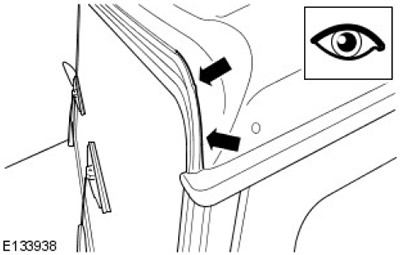
1. Apply sealant to the cracked area and remove excess.
2. Necessary materials: sealant (transparent/in body color), cloth, alcohol wipe, gloves, paint.
3. Wait until the sealant hardens and re-test the suspect area for leaks.
Is water still leaking into your car?
Yes - Perform a leak test and visual inspection of any suspect or wet area. Once a water leak has been located, refer to "Water Ingress Paths and Recommended Repair Procedure" above.
No - Reinstall previously removed trim/panels or component.
PINPOINT TEST AE: SEALING THE DRAINAGE CHANNEL
AE1: SEALING THE DRAINAGE CHANNEL
NOTE: Before performing repairs, ensure that the fault is not caused by improper installation or use of a non-recommended roof rack.
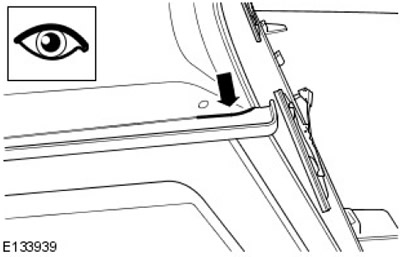
1. If the crack is small, it can be repaired with a transparent sealant (or sealant in body color). To do this, apply the sealant and rub it into the crack with your hand, after putting on a glove. If the crack is significant, you may need to have the car repaired at a body shop, which will require removing the body sealant from the channel, replacing it with a new one, and painting.
2. Necessary materials: sealant (transparent/in body color), cloth, alcohol wipe, gloves.
3. Wait until the sealant hardens and re-test the suspect area for leaks.
Is water still leaking into your car?
Yes - Perform a leak test and visual inspection of any suspect or wet area. Once a water leak has been located, refer to "Water Ingress Paths and Recommended Repair Procedure" above.
No - Reinstall previously removed trim/panels or component.
Comments on this article