Contents: Front seat frame fasteners - every 2…⇩ Front rear seat frame mounts - every…⇩ Rear seat frame mounts - every 2…⇩ Front seat controls ⇩ Seat belts - every 2 years or 48,000…⇩ Lamps, horns and indicator lights ⇩ Windscreen wipers and washers ⇩ Check the high/low gear engagement ⇩ Fine filter ⇩ Check for corrosion/cosmetic defects ⇩ Wheels and tires ⇩ Wheel speed sensors ⇩ Radiator and cooling fan ⇩ Air suspension ⇩ Door locks and hinges ⇩ Air filter ⇩ Suspension and body mounts ⇩ Fuel system ⇩ Wiring harnesses ⇩ Oil/fuel leaks ⇩ Exhaust system ⇩ Power steering ⇩ Malfunction lamp(s) ⇩ Road test ⇩
Front seat frame fasteners - every 2 years or 48,000 km
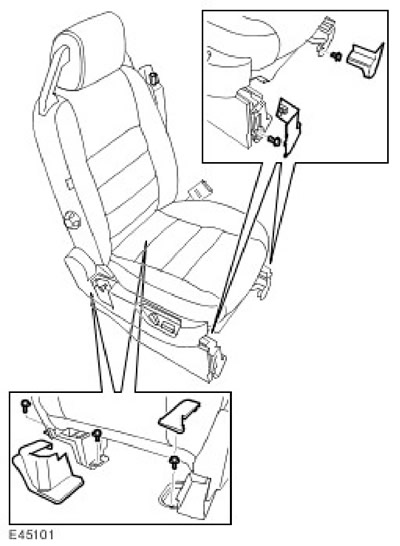
1. Carefully remove the trim panels covering the front seat frame Torx head screws.
2. Make sure the front seat frame Torx head screws are tight and there are no signs of movement on the frame.
3. Once the work is completed, install the trim panels.
Front rear seat frame mounts - every 2 years or 48,000 km
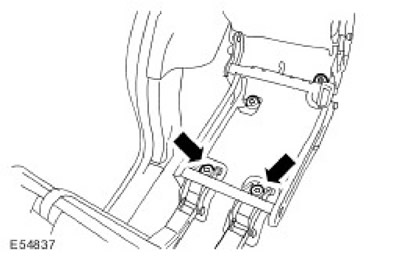
4. Make sure the front rear seat frame fasteners are securely tightened and there are no signs of movement on the frame.
Rear seat frame mounts - every 2 years or 48,000 km
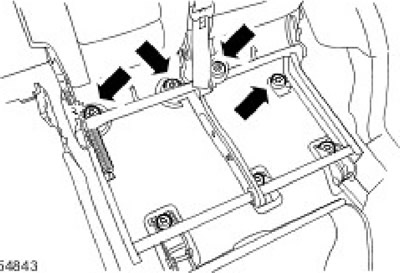
5. Fold the seat cushions forward and ensure that the rear seat frame fasteners are securely tightened and that there are no signs of movement on the frame.
6. After completing the work, return the seat cushions to their original position.
Front seat controls
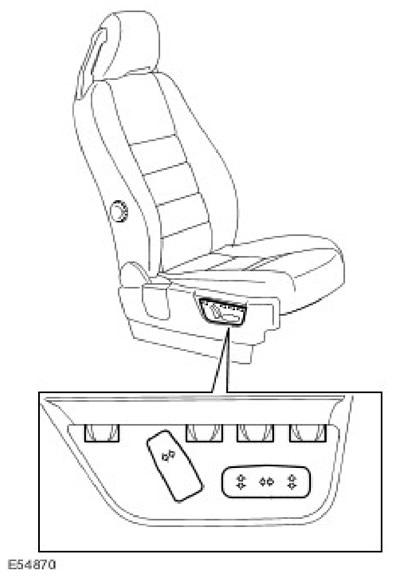
7. Check the operation of all seat controls.
Seat belts - every 2 years or 48,000 km
8. Pull each seat belt out fully and ensure it retracts via the retractor.
9. Check all belts along their entire length for signs of wear or damage.
10. Fasten each strap to its corresponding buckle and ensure that the tongue locks securely and releases properly.
11. Check that all seat belts and buckles are securely fastened.
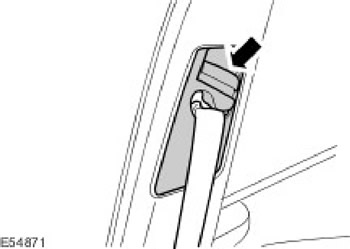
12. Check the operation of the front seat belt shoulder adjusters.
Lamps, horns and indicator lights
1. Check the operation of the headlights, parking lights, fog lights, reversing lights and tail lights.
2. Check the operation of the automatic light beam height correction system (if any).
3. Check the operation of the direction indicators and hazard warning lights.
4. Check the operation of the brake lights.
5. Check the condition of all exterior lighting device lenses. Pay particular attention to the headlight and fog light lenses and make sure that they are not chipped or otherwise damaged.
6. Check the volume and clarity of the sound signal.
7. Turn on the headlights and check the operation of the indicator of the remaining parking lights/headlights when opening the door.
8. Check the operation of the interior lighting devices.
9. Check the operation of the instrument panel indicator and signaling units.
Windscreen wipers and washers
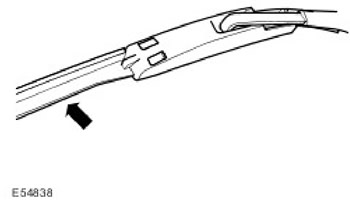
1. Check the condition of all wiper blades and make sure they are not damaged or cracked.
2. Check the reliability of the windshield wiper arms.
3. Turn on the windshield and rear window washers and make sure the jets are clear and aimed correctly.
4. Turn on the front and rear windshield wipers in all modes and make sure they operate smoothly.
Check the high/low gear engagement
1. Select a lower gear, drive the car forward a distance exceeding the length of the car body by 3-4 times, then stop the car and select a higher gear - the gears should engage smoothly.
Fine filter
1. Replace the fine filter. For more information, see Pollen Filter (412-01 Air Distribution and Filtering).
Check for corrosion/cosmetic defects
1. Perform a corrosion/cosmetic inspection annually according to the "Annual Corrosion Inspection Checklist".
Wheels and tires
1. Check that your tires meet the manufacturer's specifications. For more information, visit Wheels and Tires (204-04 Wheels and Tires).
2. Check/adjust tire pressure, including spare tire. For more information, see Wheels and Tires (204-04 Wheels and Tires).
3. Vehicles with tires that have a unidirectional tread pattern: Mark the position of the wheels relative to the hub and the location of each wheel on the vehicle so that the wheel will be in the same position when installed.
4. Loosen the wheel nuts. Raise the vehicle so that the wheels can turn freely. For more information, see Lifting (100-02 Jacking and Lifting).
5. Remove the wheels.
6. Inspect the tires for cuts, bulges, or separation. Check the tread wear across the entire width and circumference of the tire and make sure the tread depth complies with local regulations.
NOTE: Do not install wheels at this stage.
Wheel speed sensors
CAUTION: For vehicles operated under severe conditions, the following maintenance operation should be performed every 3 months or 6,000 km.
1. Check the wheel speed sensor wiring harnesses for damage.
Radiator and cooling fan
1. Vehicles operated in severe conditions: Inspect the radiator for external blockages and the fan impeller for damage.
Air suspension
1. Every 5 years or 120,000 km - Vehicles operated in severe conditions: Replace the air suspension compressor filter. For more information, refer to Air Suspension Air Filter (204-05 Vehicle Dynamic Suspension).
Door locks and hinges
1. Check the operation of all door locks, the hood and the fuel filler cap.
2. Lubricate all door opening limiters, the hood lock and the fuel filler cap lock.
Air filter
1. Every 4 years or 60,000 miles: Replace the air cleaner element. For more information, see Air Cleaner Element (303-12 Intake Air Distribution and Filtering - 4.4L).
Suspension and body mounts
1. Make sure there is no play in all suspension and body silent blocks.
2. Check the condition of the rubber boots and suspension dust boots.
3. Raise the vehicle until the front wheels are clear of the ground/lift and a suitable lever can be inserted. (for example, a steel pipe 1200 mm long). Check the lower ball joints for play by inserting a lever between the ground/lift and the tire and rocking the wheel up and down with the lever. You will need a second mechanic to observe if the ball joints move vertically when the wheel is raised. If there is play (knocking) in the ball joint, the part must be replaced.
Fuel system
1. Check fuel system lines, hoses and connections for leaks, corrosion and wear from friction.
Wiring harnesses
1. Check all wiring harnesses for wear from friction.
Oil/fuel leaks
1. Check for oil/fuel leaks.
Exhaust system
1. Check the exhaust system for leaks, damage, and tight connections.
Power steering
1. Check the condition of the power steering rod ball joints, protective boots, ball joints and dust boots.
2. Check power steering system lines, hoses and connections for wear from friction, leaks and corrosion.
Malfunction lamp(s)
1. If the malfunction lamp(s) comes on, check the relevant system using the T4 instrument and report the results.
Road test
1. Road test the vehicle. For more information, see Road/Roller Testing (100-00 General Information).
Comments on this article