Dismantling
1. Remove the cylinder head gaskets.
V8 Engine, ENGINE OVERHAUL, Cylinder Head Gasket.
2. Remove the connecting rod bearings.
V8 engine, ENGINE OVERHAUL, Connecting rod bearings.
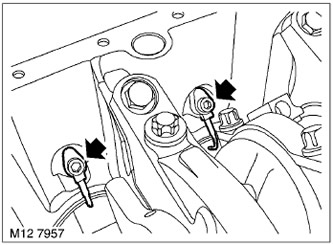
3. Using a socket head on the pulley mounting bolt and a ratchet, rotate the crankshaft to gain access to the oil jets.
4. Loosen the oil injector mounting bolts and remove the injectors.
Disassembly
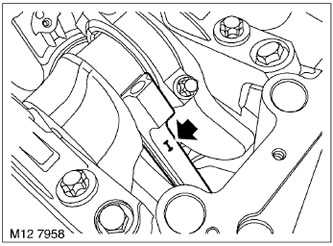
1. To make subsequent assembly easier, mark the position of the connecting rods.
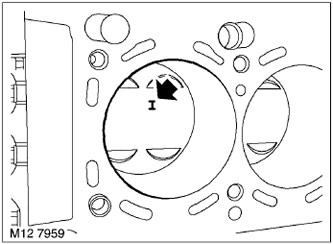
2. To simplify subsequent assembly, mark the position of the pistons.
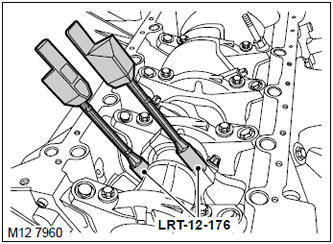
3. Install LRT-12-176 mandrels on the connecting rod to avoid damaging the cylinder bore and connecting rod journals.
4. Remove carbon deposits from the top of the cylinder.
5. Carefully knock the piston out of the cylinder.
6. Remove the LRT-12-176 guides from the connecting rods.
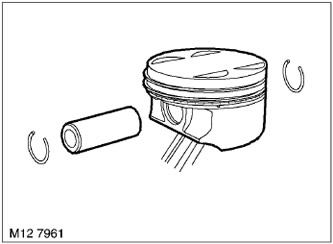
7. Clamp the connecting rod in a vice with soft jaws.
8. Carefully remove and discard the 2 piston pin retaining rings.
9. Push the piston pin out of the piston and connecting rod and remove the piston.
The article is based on information from the website: www.lrman.ru
10. Repeat the operation on the seven remaining pistons.
Examination
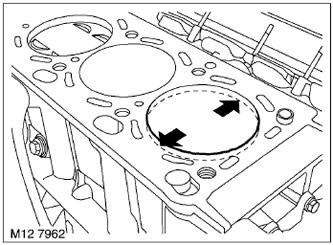
1. Wipe the cylinder surface, pistons, piston rings, connecting rods and piston pins.
2. Pistons and cylinders: Measure the cylinder diameter at the lower, middle and upper belts in the plane shown in the figure. Record the measurement results.
3. Repeat the measurement in the plane shown in the figure and, using two groups of measurements, calculate the ovality and taper of the cylinder.
TECHNICAL SPECIFICATIONS, Engine - V8.
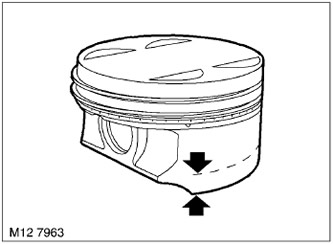
4. Starting with piston No.1, measure the skirt diameter in a plane perpendicular to the piston pin axis, at a distance of 12 mm from the lower edge of the skirt.
5. Compare the piston diameter with the cylinder diameter and calculate the gap between the piston and the cylinder.
TECHNICAL SPECIFICATIONS, Engine - V8.
6. Using special pliers, remove the rings from the piston.
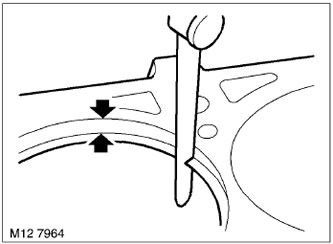
7. Insert new rings into the cylinder and check the mounting clearance in them at a distance of 30 mm from the upper plane of the block. When measuring the clearance, make sure that the rings are in a plane perpendicular to the cylinder axis.
TECHNICAL SPECIFICATIONS, Engine - V8.
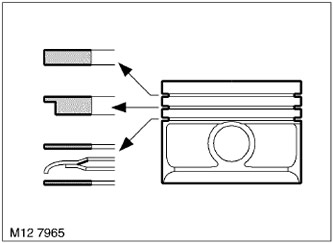
8. Install the oil control rings and expander, making sure that the rings are flush and do not overlap.
9. Place the second compression ring with the 'TOP' mark facing up.
10. Place the top compression ring with the 'TOP' mark facing up.
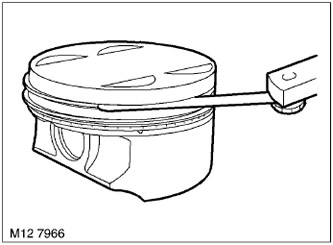
11. Check the clearance between the ring and the piston groove.
TECHNICAL SPECIFICATIONS, Engine - V8.
12. Check the fit of the piston pin in the piston: the pin should move with little effort, without jamming or noticeable play.
13. Check the wear of the connecting rod upper head bushing, check the fit of the pin in the bushing: the pin should move with little effort, without jamming or noticeable play. The connecting rod upper head bushings are not replaceable. If necessary, replace the connecting rod assembly.
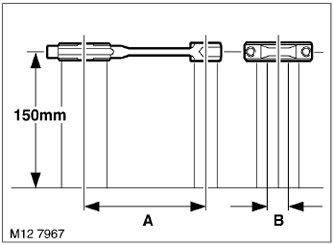
14. Check the parallelism of the axes of the upper and lower heads of the connecting rods by taking measurements at a distance of approximately 150 mm from the plane of symmetry of the connecting rod.
TECHNICAL SPECIFICATIONS, Engine - V8.
15. Check that there is no deformation on either side of the connecting rod.
Assembly
1. Wipe the cylinder bore, pistons, piston rings and connecting rods.
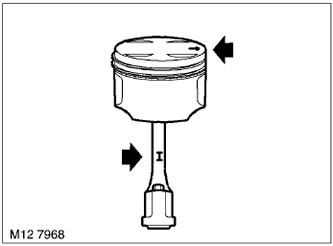
2. Install the pistons onto their connecting rods, ensuring that the arrow on the piston crown pointing towards the front of the engine is in the correct position relative to the mark made during disassembly.
3. Lubricate the piston pins, piston bores and connecting rod upper heads with engine oil. Insert the piston pins and secure them with new retaining rings, which must be fully seated in their grooves.
4. Lubricate the pistons, piston rings and cylinder bore with clean engine oil.
5. Check the freedom of movement of the rings in their grooves. Spread the ring joints 120° relative to each other so that the joints are not on the most loaded side of the piston. (left side of the piston when looking at its front).
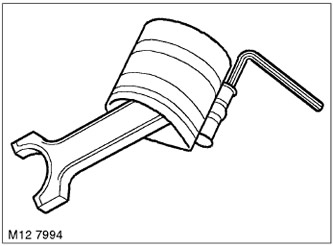
6. Compress the piston rings with a special tool.
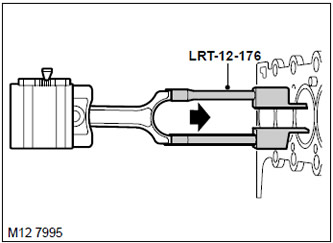
7. Install LRT-12-176 mandrels on the connecting rod to avoid damaging the cylinder bore and connecting rod journals.
8. Insert the connecting rod with the piston into the cylinder. Install the pistons with the arrow pointing towards the front of the engine, the connecting rods located on the same crankpin should be with the recesses facing each other, as shown in the figure.
9. Remove the LRT-12-176 guides from the connecting rods.
Assembly
1. Wipe the oil nozzles and mating surfaces.
2. Install the oil injectors and tighten the mounting bolts to a torque of 10 Nm.
3. Install the connecting rod bearings.
V8 engine, ENGINE OVERHAUL, Connecting rod bearings.
4. Install the cylinder head gaskets.
V8 Engine, ENGINE OVERHAUL, Cylinder Head Gasket.
Comments on this article