Modern factory technologies allow to manufacture bodies with safety frames (load-bearing bodies) practically without problems. To ensure a high level of quality, tests of mechanical properties of materials, numerous computer simulations, body collision tests are carried out, advanced technologies for the production of materials are used. When performing repairs, it is necessary to adhere to all factory quality standards. This requires equipping technical centers with modern equipment and places special demands on the qualifications of technical personnel.
To ensure high-quality body repair, it is essential to have knowledge of the factory technologies used and to constantly learn new repair methods and technologies. Repair manuals dedicated to specific models and descriptions of general repair techniques provide invaluable assistance when performing body repair.
Strictly adhere to the repair technology described in this Manual. Deviation from the repair technology may lead to a serious decrease in the safety level of the car. After the repair, all provided safety standards must be observed.
Car design
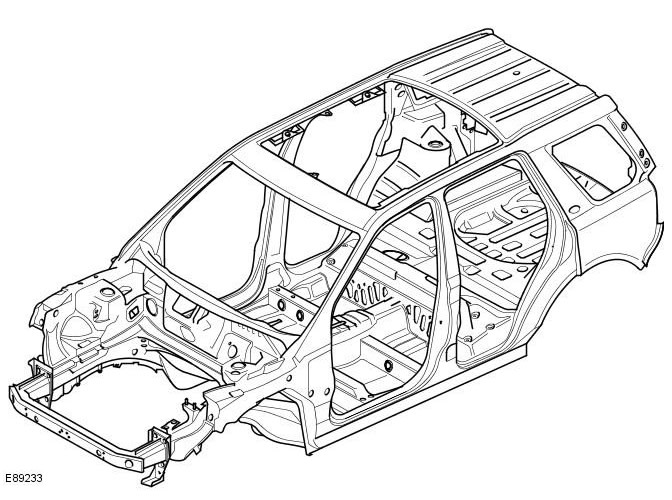
The Freelander 2 body is a standard monocoque. Two one-piece side panels are welded to the floor, roof and front panels. All this forms a strong, rigid structure. Dual-phase (DP) and annealed (BH) steel is used in the side panel reinforcements. Dual-phase steel is also used in the rear and front side members to provide additional strength in frontal and side collisions. The roof panel design allows for the installation of a sunroof. If a sunroof is not installed, the roof panel is a single stamped part with shaped stiffeners.
The main task set before the creators of the body is to ensure the safety of the driver and passengers. The safety of the body is ensured in two key ways:
- Safety cage
- Crumple zones
Safety cage
- Crush-resistant pillars, thresholds and doors.
- Side impact protection elements located in the doors.
- The design of the doors allows them to open even under severe deformation.
Crumple zone
- Dynamic absorption of deforming forces.
- Protection of the passenger accommodation area.
Body frame
Comments on this article