car logo Ford
car logo Volkswagen
car logo BMW
car logo Opel
car logo Audi
car logo Toyota
car logo Peugeot
English Русский
Български
Беларускі
Український
Српски
Hrvatski
Română
Polski
Slovenský
Magyar


Main
Freelander
Discovery
Range Rover
Defender
Contacts
Articles

Oxygen Sensors 4.0L (Discovery 3)

 
  • Main
  • Discovery
  • Discovery 3
  • Power unit
  • Electronic control part
  • Oxygen Sensors 4.0L
 
        0  
Contents: Front Oxygen Sensor ⇩ Rear oxygen sensor ⇩ Types of failures ⇩ Signs of malfunction ⇩

Front Oxygen Sensor


Front Oxygen Sensor


Rear oxygen sensor

Rear oxygen sensor


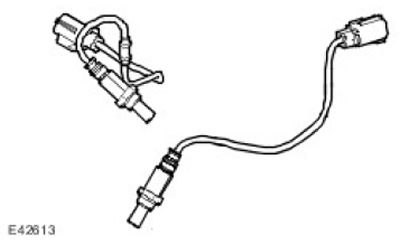
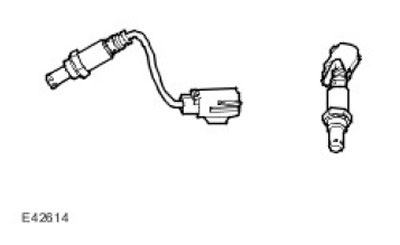
There are 4 oxygen sensors in the engine exhaust system. The two front sensors (UHEGO) are located before the catalytic converter, and the two rear sensors (HEGO) are located after the catalytic converter. The sensors measure the oxygen content in the exhaust gases. The data obtained is used to regulate the composition of the working mixture. The location of the sensor in the exhaust gas flow of each bank of cylinders allows the ECM (engine control unit) separately regulate the fuel supply to the cylinders of each row and more accurately maintain the composition of the working mixture, which increases the efficiency of the neutralizer.


The oxygen sensors can only function properly if they are heated to a high temperature. To achieve the required high temperatures, the sensors are equipped with heating elements controlled by PWM signals. (pulse width modulation), which the ECM unit transmits (engine control unit). The heating elements start working immediately after the engine starts. They also work at low loads, when the exhaust gas temperature is insufficient to heat the sensors. Heater failure leads to an increase in the sensor preparation period, which delays the transition to a closed control loop and increases the emission of toxic substances. PWM duty cycle (pulse width modulation) - signals are continuously monitored to prevent thermal shock of cold sensors.

UHEGO Sensors (universal heated oxygen sensors) have a characteristic close to linear and form a voltage signal of constant value with variable current proportional to the oxygen content in the exhaust gases. This allows for closed-loop control (with feedback) the composition of the working mixture, for example, in the engine warm-up mode (after warming up the oxygen sensor to the readiness level). This allows for more precise regulation of the content of toxic substances in the exhaust gases.

HEGO sensors contain a zirconium element and generate an output voltage that depends on the ratio of oxygen concentrations in the exhaust gases and the atmosphere. The sensor is a galvanic element enclosed in a porous ceramic jacket. The voltage generated by the ceramic element depends on the oxygen diffusing through the jacket. The nominal voltage at a stoichiometric mixture composition (I = 1) is from 300 to 500 mV. When the mixture becomes richer (l < 1), the voltage increases to 900 mV, when leaner (l > 1), it drops to 0 V. The sensor tip can withstand heating up to 1000 degrees Celsius for no more than 100 hours.


As the vehicle mileage increases, the sensor ages, which increases the response time when switching from a rich mixture to a lean mixture and vice versa. The increase in response time affects the operation of the ECM closed control loop (engine control unit) and leads to a gradual increase in exhaust toxicity. Measuring the response time to the transition of the mixture composition through one is used to diagnose the condition of the front sensors.

Diagnostics of the electrical circuits of the front and rear oxygen sensors is carried out continuously. Diagnostics is carried out by comparing the maximum and minimum threshold signs of open and short circuit.

Oxygen sensors require extremely careful handling both before and during installation. Ceramic parts of the sensor may crack if dropped, if the sensor is hit, or if the tightening torque is exceeded. Sensors should be tightened with a tested torque wrench; the tightening torque is 40-50 Nm. The sensor tip should be protected from contamination with anti-seize grease applied to the threaded part of the sensor.

Types of failures

  • Mechanical damage to the sensor and incorrect installation.
  • Open circuit/sensor disconnected.
  • Short circuit to power supply or to ground.
  • The mixture composition is outside the working range.
  • Row A and B sensors are crossed (the connectors are mixed up).
  • Contamination ("poisoning") of the sensor due to the use of leaded fuel or for other reasons.
  • Changing sensor characteristics.
  • Damage to the wiring harness.
  • Air leak in the exhaust system.


Signs of malfunction


  • Default transition to control of fuel supply to cylinders of a certain row without feedback
  • High CO content.
  • Strong smell of hydrogen sulfide (the smell of rotten eggs) before switching to default mode.
  • Increased emission of toxic substances.
The front and rear oxygen sensors can be interchanged. However, the sensor connectors are different types and are colored differently to prevent incorrect connection. In addition, the front sensors have two gas bleed holes at the end, while the rear sensors have four holes.


This article is available at russian, bulgarian, belarusian, ukrainian, serbian, croatian, romanian, polish, slovak, hungarian
Article review: Saveliy Ushakov


Previous articles
Specification 4.0L
Specification 4.4L
Specification 2.7L
Device and technical description 4.0L
Engine Control Module (ECM) 4.0L
Accelerator Pedal Position Sensor (APP) 4.0L

Current article
Oxygen Sensors 4.0L

Next articles
Knock Sensors 4.0L
Crankshaft Position and Speed Sensor 4.0L
CMP, ECT, Temperature and other sensors 4.0L
Speed control 4.0L
Generator, injectors and ignition 4.0L
Control relay 4.0L
ECM (Engine Control Unit) Correction 4.0L
Mounting box and power supply 4.0L


Similar articles from Land Rover repair manuals:
• Wheel speed sensors Freelander 2 (2006-2014)
• Sensors: Coolant Temperature (ECT) Sensor Freelander 1 (1997-2006)
• Heated oxygen sensor before the neutralizer Range Rover 3 (2001-2012)
• Wiring harnesses for wheel speed sensors Defender 2007+ (2007-2016)

Comments on this article


No comments yet


How much will 18 + 22 =


Discovery 3 
  • General information
  • Using the manual
  • Precautionary measures
  • Service Information
  • Technique
  • Health protection
  • Road test
  • Identification codes
  • Jacking and lifting
  • Maintenance - diesel
  • Maintenance - petrol
  • Chassis
  • Suspension
  • Front suspension
  • Rear suspension
  • Wheels and tires
  • Dynamic suspension
  • Cardan shaft
  • Rear drive axle
  • Front drive axle
  • Front axle axles
  • Rear axle axles
  • Brake system
  • Parking brake
  • Hydraulic brake
  • Vacuum brake booster
  • Anti-lock braking system
  • Steering
  • Steering column
  • Power unit
  • Petrol engine 4.0L
  • Petrol engine 4.4L
  • Diesel engine 2.7L
  • Engine cooling
  • Fuel supply
  • Drive units
  • Launch system
  • Ignition system
  • Emission reduction
  • Air filtration
  • Fuel vapor control
  • Electronic control part
  • Car gearbox
  • Clutch
  • All-wheel drive systems
  • Transfer case
  • Exhaust system
  • Fuel tank and lines
  • Acceleration control
  • Electrical equipment
  • Climate control
  • Instruments and control lamps
  • Battery and charging system
  • Information system
  • Lighting and headlights
  • Power distribution
  • Electronic Function Group
  • Body and coating
  • Body elements
  • Interior and body trim
  • Mirrors and glasses
  • Seats
  • Instrument panel and console
  • Handles and locks
  • Windshield wipers and washers
  • Sunroof and bumpers
  • Safety system
  • Body repairs
  • Repair of front end elements
  • Repair of back elements
  • Side panel repair
  • Frame and body mount

Discovery 1 
  • General information
  • Technical specifications
  • Introduction to manual
  • Troubleshooting
  • Power unit
  • Diesel engine Tdi
  • Petrol engine V8i (3.9 l)
  • Petrol engine V8i (4.0 l)
  • Petrol engine Mpi
  • Reducing harmful emissions
  • Fuel system Tdi
  • Fuel system MFi
  • Fuel system SFi
  • Fuel system MPi (MEMS)
  • Cruise control
  • Cooling system (Tdi)
  • Cooling system (V8i)
  • Cooling system (MPi)
  • Exhaust system
  • Transmission
  • Clutch
  • Manual gearbox R380
  • Manual gearbox LT 77
  • Transfer case LT230T
  • Automatic gearbox
  • Cardan shaft
  • Rear axle
  • Front axle
  • Chassis
  • Steering system
  • Front suspension
  • Rear suspension
  • Brake system
  • Wheels and tires
  • Body and interior
  • Passive safety
  • Doors, locks and windows
  • Exterior body parts
  • Interior trim details
  • Seats
  • Electrical equipment
  • Heating and ventilation
  • Air conditioning
  • Windscreen wipers
  • Starting and charging system
  • Equipment and devices
  • Lighting and headlights


LRman.ru © 2013-2026 | Mobile version | Free Lander | Discovery | Range Rover | Defender | Contacts | | Sitemap |
Car repair and service instructions Land Rover: Freelander, Discovery, Range Rover, Defender
We use cookies to make pages load faster and provide a more user-friendly experience 🍪