Contents: CMP sensor (camshaft position) ⇩ ECT sensor (coolant temperature) ⇩ Engine oil temperature sensor ⇩ MAF sensor (mass air flow) / IAT…⇩ MAP sensor (manifold absolute…⇩ Electronic differential…⇩ Exhaust Gas Recirculation (EGR) Valve ⇩
CMP sensor (camshaft position)
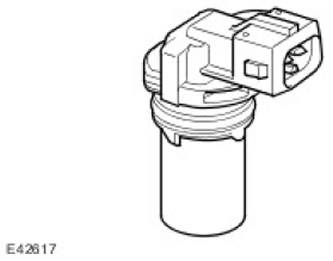
CMP sensor (camshaft position) is a magnetoelectric sensor located at the front of the engine in the valve cover above cylinder No.4.
CMP sensor (camshaft position) generates one pulse for every two revolutions of the engine crankshaft. The sensor pulses are generated by a magnetic element on the left camshaft.
ECT sensor (coolant temperature)
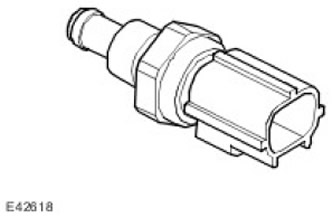
ECT sensor (coolant temperature) is a sensor with NTC (negative temperature coefficient). As the coolant temperature increases, the sensor resistance decreases.
The sensor is located at the front of the engine, behind and below the throttle body.
When a sensor fails, the ECM (engine control unit) uses the oil temperature sensor signal as a backup coolant temperature signal.
Engine oil temperature sensor
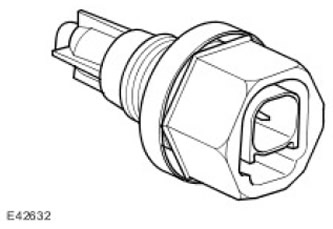
The engine oil temperature is monitored by a sensor installed in the oil pan. The sensor operates in the range from -40 to 150 degrees Celsius.
MAF sensor (mass air flow) / IAT (intake air temperature)
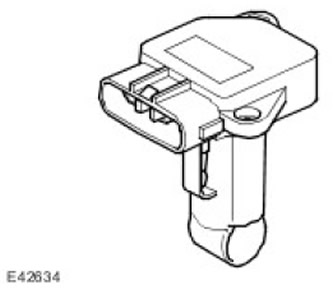
MAF sensor (mass air flow) / IAT (intake air temperature) located in the air duct between the air filter and the throttle body.
The mass air flow is determined by the intensity of cooling of the heated film sensing element located in the sensor by the incoming air. The higher the air flow, the more intensively the sensing element is cooled and the lower its electrical resistance. The sensor signal is processed by the ECM (engine control unit), which results in the calculation of the mass air flow inside the engine.
The measured value of the mass air flow makes it possible to determine the amount of fuel injected to maintain the stoichiometric composition of the working mixture, which is necessary for the correct operation of the engine and catalytic converters. In case of sensor failure, the use of backup software is provided.
IAT sensor (intake air temperature) is built into the mass air flow sensor. It is a thermistor, meaning that the sensor's resistance changes depending on the temperature. The thermistor is an NTC element. (negative temperature coefficient), that is, its resistance decreases with increasing temperature. The sensor is part of a voltage divider circuit with additional resistance located in the ECM (engine control unit). Voltage drop in this circuit as measured by the ECM (engine control unit), changes with the change in the resistance of the sensor, which corresponds to the change in temperature.
By default, the air temperature is set to 35°C.
MAP sensor (manifold absolute pressure)
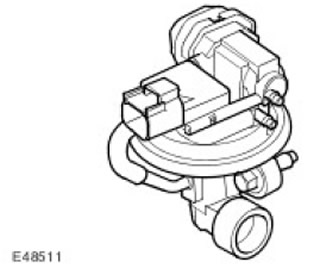
MAP sensor (manifold absolute pressure) generates a voltage proportional to the absolute pressure in the intake manifold.
This signal is used by the ECM. (engine control unit) when calculating engine load.
The sensor is mounted in the EGR valve (exhaust gas recirculation) on the left front side of the engine.
Electronic differential pressure/manifold absolute pressure (DPFE/MAP) feedback sensor (manifold absolute pressure))
The pressure sensor monitors the pressure difference across the diaphragm in the EGR system channel (exhaust gas recirculation) and transmits this data to the ECM (engine control unit). The pressure difference measured across the diaphragm is used to estimate the flow rate of the recirculated exhaust gases. The electronic vacuum regulator (EVR) regulates the vacuum signal acting on the EGR valve. (exhaust gas recirculation), based on the electrical signal from the ECM (engine control unit). ECM (engine control unit) controls the EGR level (exhaust gas recirculation), using the feedback signal from the DPFE/MAP sensor (manifold absolute pressure). As a result, a closed control system is formed.
Exhaust Gas Recirculation (EGR) Valve
EGR valve (exhaust gas recirculation) is a PWM controlled valve (pulse width modulation) -signals and ensures the return of exhaust gases back to the engine. Since exhaust gases contain very little free oxygen, they are practically inert. Exhaust gases replace air in the combustion chamber, which reduces the combustion temperature. A decrease in combustion temperature leads to a decrease in the formation of nitrogen oxides (NOx).
Comments on this article