


Contents: Fuel pump relay ⇩ Viscous Clutch Fan Control ⇩ Starter relay ⇩ Condenser Fan Control ⇩ IMT valve (intake manifold…⇩
Fuel pump relay
The V6 engine uses a closed fuel supply system. Regardless of the pressure in the intake manifold, a constant fuel pressure of 4.5 bar is maintained in the fuel system. Fuel is supplied to the injectors by a fuel pump located in the fuel tank. ECM (engine control unit) controls the supply of power to the fuel pump via the fuel pump relay. In the event of a collision, the ECM (engine control unit) receives a crash signal from the SRS control module and de-energizes the fuel pump relay. Fuel system pressure is generated immediately after ECM power is applied. (engine control unit), and then the fuel pump is turned off until the engine starts.
The fuel pump relay is located in the CJB. (central mounting box). The fuel pump is located in the fuel tank. For more information, refer to Fuel Tank and Lines (310-01A)
Viscous Clutch Fan Control
ECM Block (engine control unit) regulates engine cooling by controlling the viscous fan. To regulate the fan performance, the ECM (engine control unit) uses PWM (pulse width modulation) -signals, controlling the clutch slip coefficient. EMS determines the fan speed using a Hall effect sensor.
Starter relay
Power is supplied to the starter relay via fuse 19 in the battery mounting box.
ECM (engine control unit) controls the starter relay by supplying a 12V signal to the relay coil when the ignition switch is in the engine start position. This occurs when the gear selector lever is in the P or N position.
Condenser Fan Control
In ECM (engine control unit) via CAN bus (local area network of controllers) messages are received from the ATC control unit (automatic temperature control) for cooling fan and adjusting the speed of rotation of the crankshaft in idle mode.
AirConCoolingRequest (air conditioner cooling level request)
This signal sets the cooling level (for the engine cooling fan(s)) required by the ATC system. (automatic temperature control). As a result of internal calibration, the EMS selects the fans to be activated and determines the required fan speeds for each requested level.
AirConIdleSpeedRequest (air conditioner idle speed request)
This signal determines whether or not the idle speed needs to be increased for the ATC system. (automatic temperature control). The degree of increase in idle speed is calculated in EMS during the calibration process.
IMT valve (intake manifold adjustments)
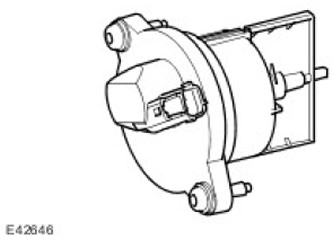
The IMT () moves a plate inside the intake manifold, allowing or blocking sound pulses that are transmitted between the individual halves of the manifold. In effect, this results in wider intake runners and improved low-end torque. IMT Valve (intake manifold adjustments) is a two-position valve and can only be in two states: fully open and fully closed. For more information, refer to Intake Air Distribution and Filtering (303-12A)
Comments on this article