Generator
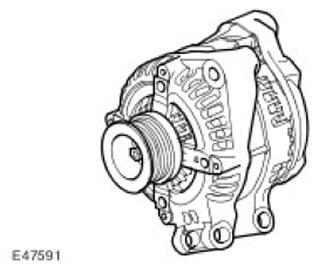
The generator has a multifunctional voltage regulator used in the charging system (14 V) and rectifiers based on zener diodes.
ECM (engine control unit) controls the electrical system load by PWM (pulse width modulation) -signals and and regulates the generator output power in accordance with the specified load. In addition, the ECM (engine control unit) monitors the battery temperature to determine the generator regulator setting. This parameter is needed to protect the battery from damage. At low battery temperatures, its ability to accept a charge is extremely low, and to compensate for this circumstance, it is necessary to increase the charging voltage as much as possible, but at high temperatures, the charging voltage must be reduced to prevent excessive gas formation and, as a result, loss of water from the electrolyte. For more information, contact Generator (414-02A Generator and Regulator - 4.0L)
The alternator circuit includes intelligent controls that reduce the load on the alternator when maximum engine torque is needed for other purposes. This control uses three signals to the ECM (engine control unit):
- Generator Sensor A measures voltage at the CJB (central mounting box).
- The Generator Data Transfer (Alt Com) system transmits the generator voltage setpoint from the ECM (engine control unit) into the generator.
- The generator status sensor (Alt Mon) transmits to the ECM (engine control unit) the magnitude of the current in the generator load circuit. In the same data packet in eCm (engine control unit) fault signals are sent. Based on the received CAN messages (engine control unit) sends a request to the instrument panel to turn on the charging circuit indicator light.
Nozzles
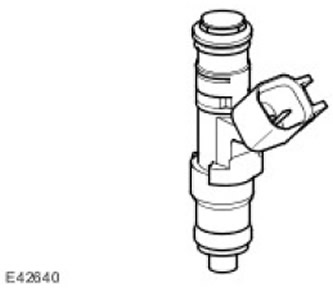
ECM (engine control unit) controls 6 fuel injectors located in the cylinder head. Fuel is supplied to the injectors from the fuel rail, which is part of the fuel supply without backflow.
The pressure in the fuel rail is maintained constant (equal to 4.5 bar) and is controlled by a regulator built into the fuel pump module. ECM (engine control unit) monitors the output stage circuits of the injector drive units for electrical faults. The default injector resistance at 20 degrees Celsius is 14.5 ohms. For more information, see Fuel Charging and Controls (303-04A Fuel Charging and Controls - 4.0L)
Spark plugs
Only factory-tested spark plugs may be operated. DO NOT ATTEMPT to use spark plugs that are 'similar in performance'. The use of improper spark plugs may cause the misfire detection system to malfunction and save the ECM. (engine control unit) relevant data.
(Details can be found on the website: www.lrman.ru)
Ignition coils
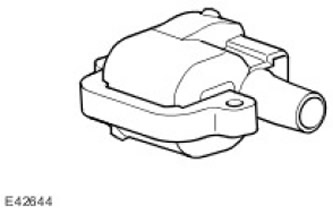
The Land Rover V6 engine is equipped with ignition coils that are driven directly by the ECM. (engine control unit). The coils are mounted on top of the intake manifold and are connected to the spark plugs via high tension (HT) wires. Positive supply voltage is supplied to the coil via fuse 19 in the BJB (battery junction box). Each coil has a power stage that controls the switching on and off of the primary winding. To turn on the power circuit of each coil, the ECM (engine control unit) sends the appropriate control signal. The ignition coil power circuit provides the feedback signal. When the coil power circuit fails, the feedback signal is lost and the ECM (engine control unit) saves the fault code.
Comments on this article