Contents: Crankshaft Position Sensor (CKP) ⇩ Camshaft Position Sensor (CMP) ⇩ Coolant Temperature (ECT) Sensor ⇩ Oil temperature sensor ⇩ Fuel rail temperature sensor ⇩ Combined Mass Air Flow/Intake Air…⇩ Manifold Absolute Pressure (MAP)…⇩
Crankshaft Position Sensor (CKP)
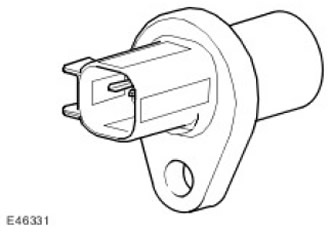
The crankshaft position sensor is mounted at the lower rear of the engine, near the transmission. The sensor is connected to the common wiring harness using an intermediate harness and a two-pin connector. Both wires go directly to the ECM. (engine control unit). The sensor generates a signal that allows eSm (engine control unit) determine the angular position of the crankshaft and its rotation speed. The position of the crankshaft determines the ignition timing, fuel injection timing, etc. If the signal circuit wires are swapped, the ignition timing will increase by 3° because the ECM (engine control unit) uses the trailing edge of the signal for each tooth to count.
The timing rotor is pressed into the flywheel and has 36 teeth approximately 3° wide, spaced at 10° intervals with one tooth missing, providing a hardware-set reference point at 60 degrees BTDC. Due to the orientation of the crankshaft sensor, the timing disk uses serrations in the surface rather than teeth.
When the magnetic flux changes due to the passage of the notch past the sensor, a voltage signal is generated in the sensor. The value of the sensor output voltage changes with the change in the speed of the passage of the notch past the sensor: the higher the speed, the higher the output voltage. It should be noted that the output voltage also depends on the size of the air gap between the sensor and the setting wheel. (the bigger the gap, the weaker the signal). ECM block (engine control unit) transmits the crankshaft speed signal to other electronic modules via the CAY bus (local area network controller).
Camshaft Position Sensor (CMP)
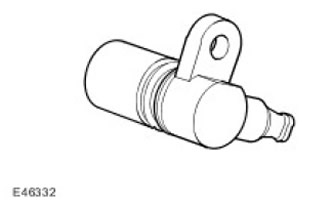
At the rear of the engine, in the cylinder head above the rear cylinders, there are 2 sensors (one per row). Each sensor is a variable reluctance sensor (VRS) and generates 4 pulses for every 2 engine crankshaft revolutions. The sensing element is located within 2 mm of the camshaft gear.
The adjustable intake cam is set to the retarded position and can be advanced by up to 48 degrees.
Information obtained from the website www.lrman.ru
The camshaft gear is made by sintering metal powder. The four teeth of the gear allow the EMS to identify the cylinders. The sensor signal is used to:
- Intake camshaft synchronization
- Cylinder recognition
- Implementation of phased fuel injection
- Detonation control
- Identification of cylinders during diagnostics
- Ignition timing control switches to using a base data array (data cards), without cylinder correction
- The knock suppression system is disabled (a transition to the use of a safe ignition map with a loss of engine energy indicators is carried out)
- There is no rapid coordination of the relative positions of the crankshaft and camshafts when starting the engine
- Changing valve timing is prohibited
Coolant Temperature (ECT) Sensor
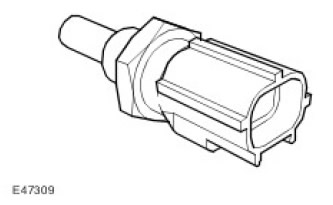
The sensor is located at the front of the engine, in the cooling system pipe under the throttle body. The ECT temperature sensor is a thermistor and is used to monitor the engine coolant temperature. The coolant temperature sensor is of great importance in engine management. For a confident cold engine start and its smooth operation during warming up, a richer working mixture is required, after warming up the engine, the mixture must be leaned out to maintain the desired engine performance and low emissions of toxic substances.
The sensor operates in a temperature range of -30 to +125 degrees Celsius. When a fault is detected in the coolant temperature sensor, the ECM (engine control unit) uses the oil temperature sensor value.
Oil temperature sensor
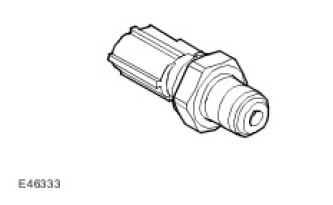
The temperature of the engine oil is monitored by a sensor installed in the lubrication system. The sensor is of the NTC type (negative temperature coefficient). The oil temperature sensor is located next to the oil pressure sensor, at the front of the engine, on the oil filter bracket.
Fuel rail temperature sensor
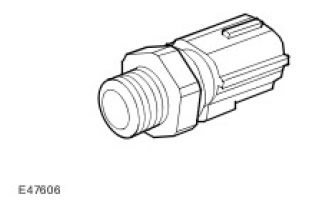
The sensor measures the fuel temperature in the fuel rail. The sensor signal is used to make a correction to the calculated value of the cyclic supply. The sensor operates in the temperature range from - 40 to +150 degrees Celsius. The sensor is installed in the rear part of the fuel rail of the right cylinder bank (bank A).
Combined Mass Air Flow/Intake Air Temperature (MAF/IAT) Sensor
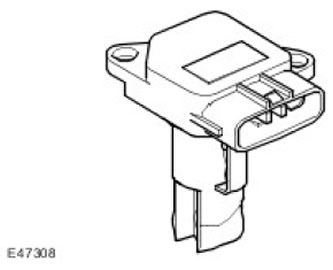
The air flow meter is located in the intake pipe, immediately behind the air filter housing.
The mass air flow is determined by the intensity of cooling of the heated film sensing element located in the sensor by the incoming air. The higher the air flow, the more intensively the sensing element is cooled and the lower its electrical resistance. ECM (engine control unit) uses the signal from the mass air flow sensor to calculate the mass of air entering the engine.
The measured air mass value makes it possible to determine the amount of fuel injected to maintain
stoichiometric composition of the working mixture, which is necessary for the proper operation of the engine and catalytic converters.
In case of sensor failure, backup software is provided.
Sensor failure is accompanied by the following symptoms:
- "Failure of revs" while driving.
- Difficulty starting the engine or the engine stalls after starting.
- Poor engine response/performance.
- The regulation of the mixture composition and idle speed is stopped.
- Exceeding the exhaust gas toxicity standard.
- AFM signal offset
In case of damage to the ECM sensor (engine control unit) keeps the air temperature at the default value of 25°C.
Manifold Absolute Pressure (MAP) Sensor
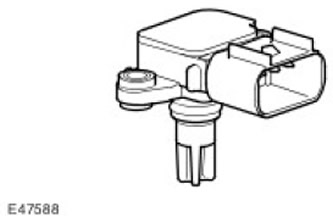
MAP sensor ((manifold absolute pressure)) generates a voltage proportional to the absolute pressure in the intake manifold. This signal is used by the ECM (engine control unit) when calculating engine load. The sensor is located at the rear of the intake manifold.
| Contact No. | Purpose |
| 1 | MAP signal ((manifold absolute pressure)) |
| 2 | MAP sensor power supply |
| 3 | Not used |
| 4 | Sensor mass |
MAP sensor output signal ((manifold absolute pressure)) together with signals from CKP sensors (crankshaft position) and IAT (intake air temperature) used by ECM (engine control unit) to calculate the amount of air entering the cylinders. This allows the ECM (engine control unit) determine ignition timing and fuel injection duration.
On the MAP sensor ((manifold absolute pressure)) 5 V supply voltage is supplied from pin 48 of connector C0634 of the ECM unit (engine control unit). The sensor outputs an analog signal to pin 69 of the ECM connector C0634. (engine control unit), which corresponds to the absolute pressure in the manifold and allows the ECM (engine control unit) calculate engine load. Pin 11 of ECM connector C0634 (engine control unit) is the mass of the ECM sensor (engine control unit).
If the MAP signal ((manifold absolute pressure)) missing, ECM (engine control unit) instead, it uses the default value of the manifold pressure corresponding to the crankshaft speed and throttle angle. The engine will continue to operate with slightly degraded energy performance and increased toxic emissions, although this may not be noticed by the driver for some time. ECM (engine control unit) will store fault codes that can be read using T4.
Comments on this article