Contents: Dismantling ⇩ Installation ⇩
Dismantling
1. Disconnect the negative battery terminal.
WARNING: Fuel vapors are highly flammable and toxic and explosive in confined spaces. Always have a foam, carbon dioxide (CO₂), gas or powder fire extinguisher on hand when working with fuel.
2. Before starting work, clean the areas adjacent to the radiator and fuel fittings. Care should be taken not to damage the radiator when installing it.
3. Place a container under the radiator to collect any spilled fuel.
4. Place rags around the fuel lines to collect any leaking fuel.
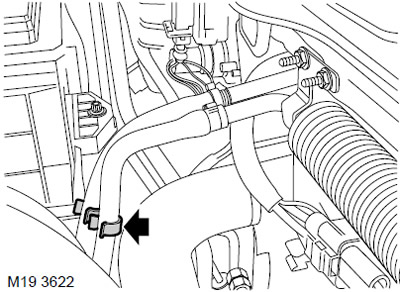
5. Remove the clamp holding the fuel inlet and outlet hoses together.
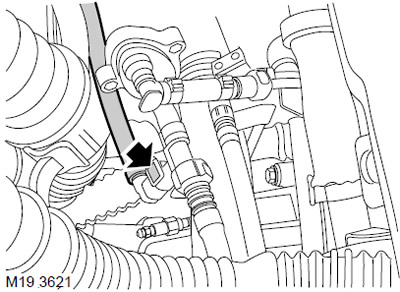
6. Disconnect the fuel return hose from the return line.
CAUTION: Before disconnecting or removing system components, make sure that the adjacent surfaces of the joints are free of dirt. Install plugs in the openings of the fittings and pipes to prevent dirt from entering the system.
7. Disconnect the fuel supply hose from the fuel radiator. Discard the clamp.
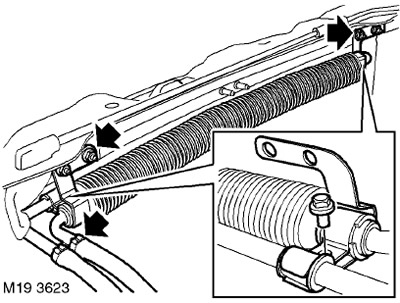
8. Unscrew the 4 nuts securing the fuel cooling radiator brackets to the upper cross member of the radiator frame and carefully remove the radiator.
9. Mark the position for ease of assembly and unscrew the 2 bolts securing the brackets to the fuel radiator. Remove the brackets with rubber bushings.
Installation
1. Install the brackets with rubber bushings on the fuel radiator.
2. Tighten the bolts securing the brackets to the fuel radiator, tightening torque 10 Nm.
3. Install the fuel cooling radiator on the upper cross member of the radiator frame and tighten its mounting nuts to a torque of 10 N·m.
4. Wipe the connecting parts of the fuel hoses.
5. Connect the fuel supply hose and secure it with a new clamp.
6. Connect the drain hose to the return drain line.
7. Install the clamp that holds the fuel inlet and outlet hoses together.
8. Connect the negative terminal to the battery.
Comments on this article