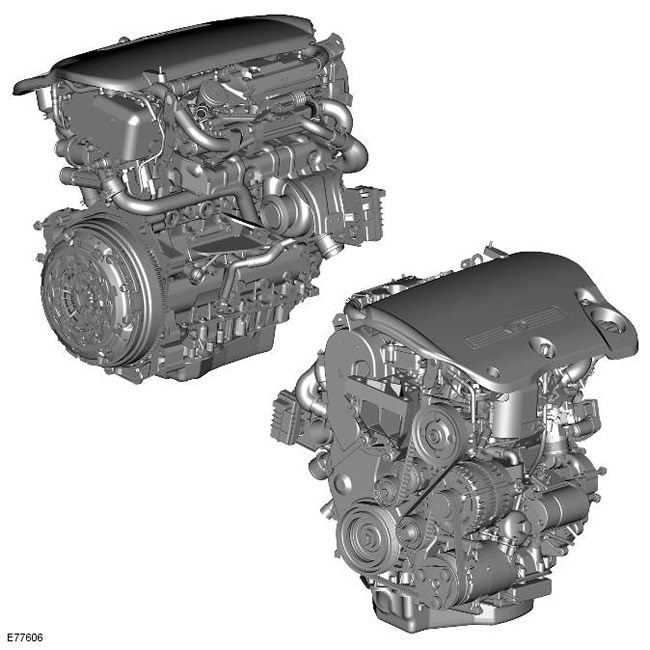
NOTE: The Freelander 2 uses a new TD4 diesel engine. This TD4 diesel engine has not been used previously by Land Rover and should not be mistaken for the Td4 diesel engine used in the previous Freelander.
The new TD4 diesel engine may also be referred to or named in text as the 2.2L Duratorq-TDCi (DW).
The TD4 diesel engine is a 2.2 L inline 4-cylinder engine with a DOHC layout (with two overhead camshafts) and four valves per cylinder. The valves are operated by roller valve levers and hydraulic clearance compensators. Air and diesel fuel are delivered to the cylinders via an electronically controlled VGT and a Bosch 3rd generation fuel system with a common rail fuel collector.
The electronic engine management system and engine control module (ECM) from Bosch ensure monitoring of engine performance and optimum efficiency.
The engine is a compact unit that occupies minimal space. It is designed to improve noise, vibration and harshness (NVH) performance. The reduced engine size helps to provide a high level of pedestrian protection and meet high-speed crash performance standards.
The engine design includes a precisely machined cast aluminum alloy cylinder head and a multi-layer metal head gasket. The head is securely bolted to the machined cast iron cylinder block. The cylinder head contains 16 valves (4 for each combustion chamber), a valve mechanism, camshafts and gas distribution mechanism, fuel injectors and preheating plugs. The cylinder head is provided with drilled holes and channels for lubricating oil and coolant.
The cylinder head is integrated with the cast lower camshaft bearing caps and is closed by a mating camshaft cover with a sealing gasket. The camshaft cover is integrated with the cast upper camshaft bearing caps and has air intake channels, ports for the cylinder head cover and crankcase ventilation system elements.
The 'L' shaped cylinder head cover has structural holes for the camshaft cover. It incorporates the positive crankcase ventilation (PCV) valve, relief valve and PCV connections.
A sound-insulating engine cover is installed above the engine, it has a layer of polypropylene foam glued to the back of the thermoplastic cover. The cover is designed to absorb and reduce engine noise down to acceptable NVH levels. An opening in the rear left side of the engine cover is designed to accommodate the engine oil filler cap.
The cylinder block contains the crankshaft and bearings, oil cooling nozzles, crank mechanism components and the balance shaft housing. The cylinder block has openings and channels for lubricating oil and coolant. The balance shaft housing is bolted to the underside of the cylinder block and is driven by a gear transmission from the crankshaft. The balance system improves the NVH characteristics of the engine, ensuring smooth operation.
The aluminum oil pan housing and stamped steel oil pan are attached to the bottom of the cylinder block. The oil pan housing is sealed and bolted directly to the cylinder block. The oil pan is sealed with liquid sealant and is attached to the oil pan housing to form the oil reservoir. Located inside the oil pan is the oil pump for the oil system, which is bolted to the underside of the cylinder block. The oil pump is driven by a chain from the crankshaft.
Engine cooling is provided by a pressure-operated cooling system that uses coolant as the working medium. The engine-driven coolant pump distributes the coolant through passages in the cylinder head and block.
The engine exhaust gas toxicity complies with the regulatory requirements of the European Commission Directive (EUCD) Stage 4. The limitation of the resulting emission of toxic products is achieved by using a catalytic converter in the exhaust system, an optional diesel particulate filter (DPF), improved electronic engine management, PCV and an exhaust gas recirculation (EGR) system.
Comments on this article