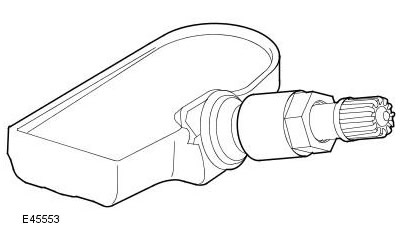
Tire pressure sensors use a PTC sensor and a piezoelectric sensor to periodically measure the pressure and temperature of the air inside the tire. The data is transmitted using high-frequency signals - 315 or 433 MHz, depending on market requirements.
The data transmitted from the sensor by high-frequency signals contains a unique identification code. This allows the TPMS system to recognize the wheels on the vehicle. In the case of replacing the sensor on the "working" wheel, the identification data of the new sensor will be obtained after driving the vehicle for more than 15 minutes at a speed exceeding 20 km/h.
When installing a new sensor on the spare tire, its identification information can be programmed into the TPMS using IDS. The code is located on a label on the new wheel assembly with the tire and sensor. It is also printed on the packaging of each sensor. In addition, the spare tire can be programmed into the TPMS by driving it as a "working" tire for 15 minutes at a speed exceeding 20 km/h. After this, the wheel must be removed and installed in the spare tire position.
The tire pressure sensor can also detect wheel rotation. To prevent battery discharge, the sensor uses different data transfer rates when the car is parked and when the car is moving. A very low wheel rotation speed is enough to switch from a slow gear to a fast one, which is important when driving slowly off-road.
To avoid damaging the sensor, follow the precautions detailed in this section under "Replacing a Tire". When installing a new sensor, also replace the nut, seal and washer, and tighten the sensor nut to the specified torque specified in the Workshop Manual.
Comments on this article