


Driver and passenger protection system control unit
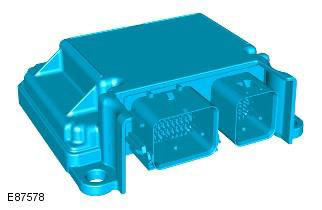
The RCM control unit has two zones that determine whether a particular element of the system should be turned on:
Zone 1 - Accident Severity Assessment: The first zone determines the severity of the accident based on data from the integrated acceleration sensor, the frontal impact sensor and the sensor in the seat belt buckle. Based on this data, the RCM determines the required level of deployment of the airbags and transmits the information to the second zone - the deployment processor.
Zone 2 - Trigger Handler: Before deciding whether to activate any of the safety features, the status of the seat position sensor, the occupant classification system, and the sensors in the seat belt buckles are examined. For example, if the occupant classification system indicates that the passenger seat is unoccupied, the passenger side safety features will not be activated, even if all available safety features are activated for the driver.
The controller's energy reserve ensures its operation for at least 150 ms in the event of a power supply circuit break during a collision. The accumulated energy is sufficient to send signals to activate the airbags and seat belt pretensioners for the driver and front passenger.
When the ignition is switched on, the RCM monitors the system cyclically. If a fault is detected, the RCM stores a fault code and sends a signal to activate the airbag warning lamp. Fault information can be retrieved using the Land Rover approved diagnostic system. If a fault is detected that could result in an erroneous inflator activation signal, the RCM disables the inflator signal circuit. In this case, the inflator will not deploy in the event of a collision.
Comments on this article