Contents: Dismantling ⇩ Installation ⇩
Dismantling
1. Disconnect the negative battery terminal.
2. Remove the rear timing belt cover.
ENGINE - MODIFICATION K, volume 1.8, Front exhaust camshaft oil seal, Rear timing belt cover.
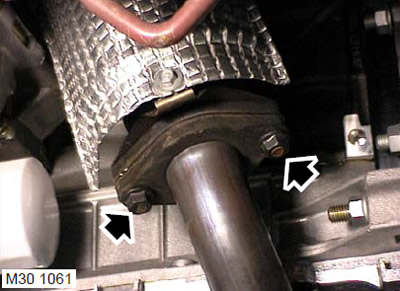
3. Unscrew the two nuts securing the inlet pipe to the exhaust manifold.
4. Remove the inlet pipe with the gasket from the exhaust manifold.
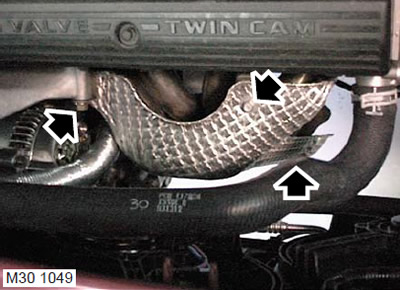
5. Models with air conditioning: Remove the nut and 2 bolts securing the exhaust manifold heat shield.
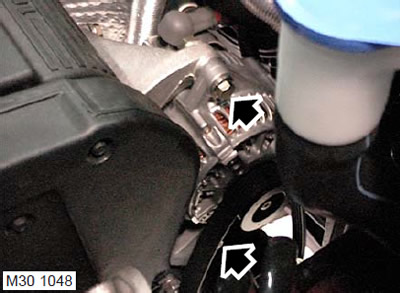
6. Models with air conditioning: Remove the upper alternator mounting bolt and loosen the lower bolt. Move the alternator forward to gain access to the heat shield.
7. Models with air conditioning: Remove the heat shield.
8. Drain the coolant from the engine.
COOLING SYSTEM: MODIFICATION K, volume 1.8, ADJUSTMENTS, Draining the coolant, flushing the system and filling.
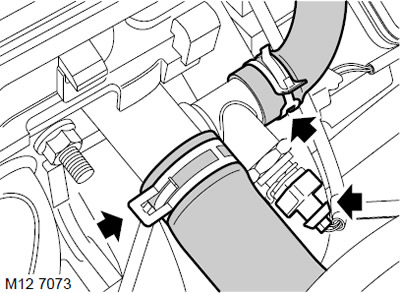
9. Loosen the clamp and disconnect the upper hose from the elbow of the cooling system.
10. Loosen the clamp and disconnect the cooling system hose from the cooling system outlet pipe.
11. Disconnect the connector from the coolant temperature sensor.
12. Remove the valve cover.
ENGINE - MODIFICATION K, volume 1.8, Front exhaust camshaft oil seal, Valve cover gasket.
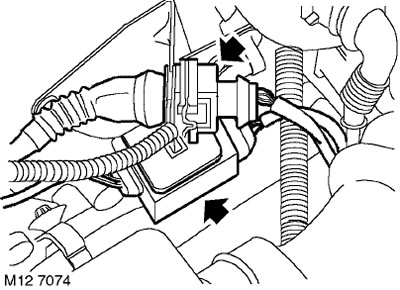
13. Release the camshaft position sensor connector from the bracket at the rear of the cylinder head.
14. Loosen and disconnect the oxygen sensor connector.
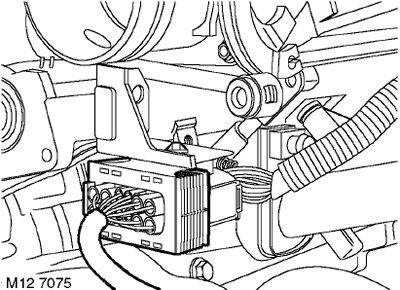
15. Disconnect the connector from the injector wiring harness.
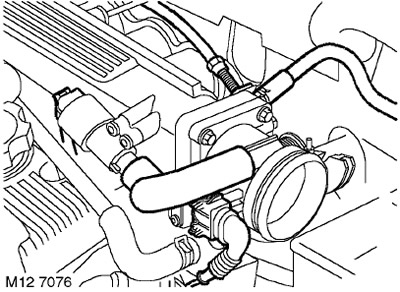
16. Disconnect the connector from the throttle position sensor.
17. Disconnect the connector from the idle speed control valve.
18. Disconnect the bypass air hose from the idle air control valve and remove it from the throttle body.
19. Disconnect the idle speed control harness clamp from the bracket under the throttle body.
20. Loosen the clamp and disconnect the purge hose from the intake manifold.
21. Unscrew the throttle control cable adjusting nut from the bracket.
22. Remove the cable from the throttle control sector.
23. Lay out a rag to collect any leaking fuel.
CAUTION: Fuel leakage is inevitable during this operation. Take safety measures to prevent fire or explosion.
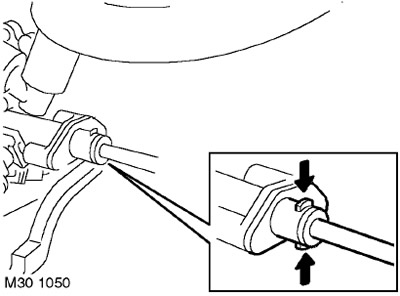
24. Disconnect the fuel supply hose from the fuel rail.
CAUTION: Always plug the fittings and holes to protect the system from dirt.
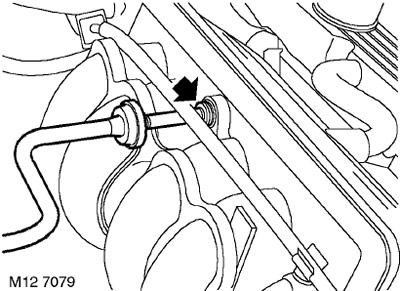
25. Press the plastic shoulders of the quick-release connector and disconnect the brake booster hose from the intake manifold.
Data taken from the website [LRman.ru]
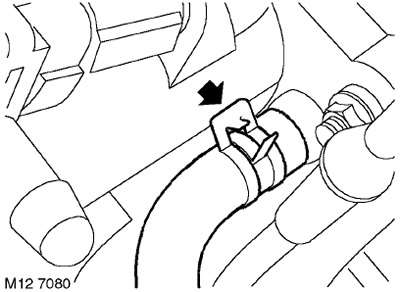
26. Loosen the clamp and disconnect the expansion tank hose from the intake manifold.
27. Temporarily install the gears on the camshafts, screw in the mounting bolts, but do not tighten them.
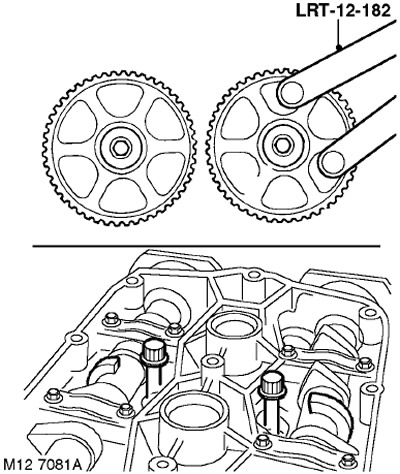
28. Using the LRT-12-182 tool, rotate the camshafts to gain access to the cylinder head mounting bolts located under the inductive camshaft position sensors.
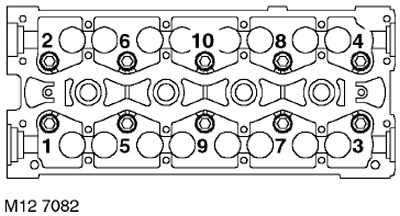
29. Loosen the cylinder head mounting bolts in the sequence shown in the figure.
30. Remove the cylinder head mounting bolts and arrange them in the order in which they were located on the cylinder head.
31. With the help of a partner, remove the cylinder head.
CAUTION: When removing the cylinder head, be careful not to damage the oxygen sensor.
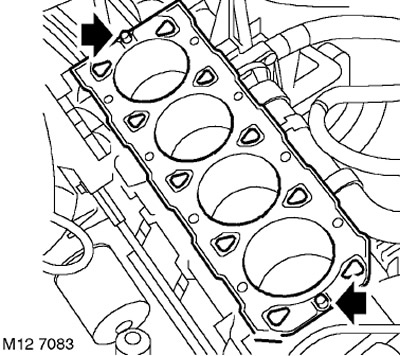
32. Remove and discard the cylinder head gasket.
CAUTION: Removing the cylinder head mounting bolts will cause the crankshaft to "stick". For this reason, operations involving crankshaft rotation should be limited as much as possible. Do not rotate the crankshaft until the LRT-12-144 cylinder liner fasteners have been installed.
33. Determine the type of pins installed: remove the nylon pins and install steel ones. Steel pins do not need to be replaced.
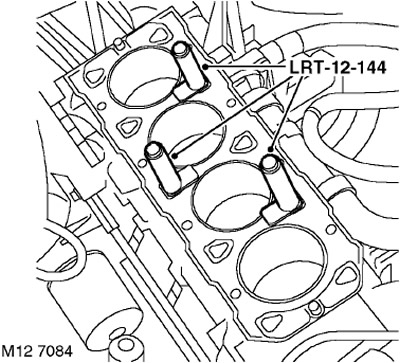
34. Install the LRT-12-144 cylinder liner fasteners on the cylinder block and secure them with the cylinder head fastening bolts. The base of the cylinder liner fasteners should not protrude above the cylinder bore.
CAUTION: The bolts used must be screwed into the same sockets in which they were located on the assembled engine.
Installation
1. Remove the bolts from the LRT-12-144 cylinder liner fasteners and remove the fasteners.
CAUTION: Store the cylinder head bolts in the order they were on the assembled engine. Do not rotate the crankshaft after removing the cylinder liner fasteners. Do not apply force to the cylinder liners after removing their fasteners.
2. Clean the mating surfaces of the cylinder head and cylinder block.
3. Check that the cooling system and lubrication system passages are clean.
4. Check for damage on the lower surface of the cylinder head and on the upper surface of the cylinder block. Particular attention should be paid to the condition of the lower surface of the cylinder head.
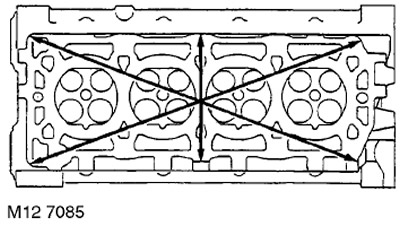
5. Check the cylinder head plane for warpage by placing a straight edge along the directions shown in the figure.
TECHNICAL SPECIFICATIONS, Engine - petrol K1.8.
NOTE: Grinding the bottom surface of the cylinder head is permitted provided that the head height remains within acceptable limits.
6. Thoroughly wash the cylinder head mounting bolts, wipe them dry and lightly lubricate their threaded portion and headrest with engine oil.
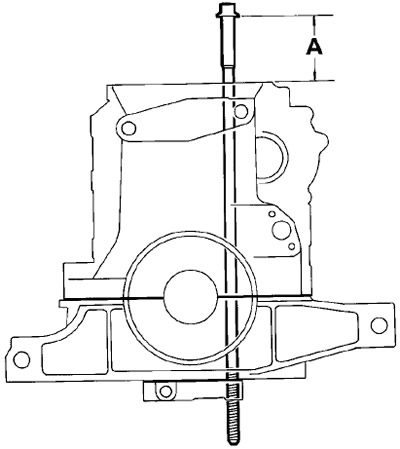
7. Carefully insert the bolts into their sockets in the order they were on the assembled engine, DO NOT DROP A BOLT INTO THE SLOT. Tighten each bolt until snug with finger force only.
8. Measure the distance 'A' from the bolt head to the top plane of the cylinder block as shown in the figure:
- 97mm: Bolts are reusable.
- Over 97mm: New bolts must be used.
9. If the nylon pins were removed, then you need to clean their sockets and install new steel pins.
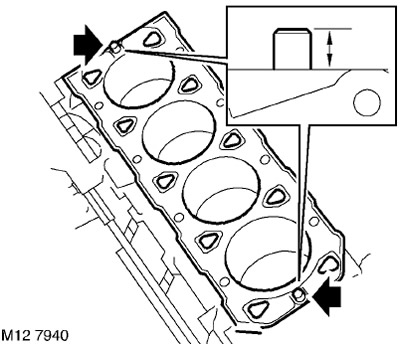
10. The protrusion of the pins should be from 10 to 11 mm.
11. Temporarily install the gear wheels on the camshafts, screw in and slightly tighten the bolts that secure them.
12. Install a new cylinder head gasket onto the cylinder block with the 'TOP' mark facing upwards.
CAUTION: Gaskets must be installed dry.
13. With the help of a partner, install the cylinder head on the block so that the pins enter the sockets.
14. Using the LRT-12-182 tool, rotate the camshafts to gain access to the cylinder head mounting bolts located under the inductive camshaft position sensors.
15. Carefully insert the bolts into their sockets in the order they were on the assembled engine, DO NOT DROP THE BOLT INTO THE SLOT. Tighten the bolts by hand.
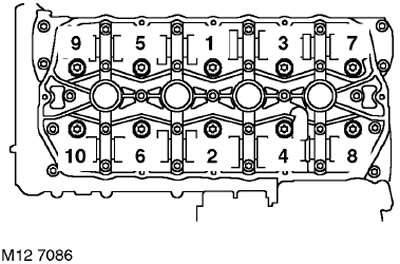
16. Tighten the cylinder head mounting bolts in the sequence shown in the figure:
- Stage 1: 20 Nm.
- Turn another 180°.
- Turn another 180°.
CAUTION: Do not turn the bolts 360° in one go.
NOTE: Use LRT-12-182 to rotate shafts and gain access to bolt heads.
17. After tightening the cylinder head mounting bolts, rotate the camshafts so that the locating pin for the intake camshaft gear is at the 4 o'clock position and the exhaust camshaft gear is at the 8 o'clock position.
18. Hold the camshafts with the LRT-12-182 fork and remove the camshaft timing gear mounting bolts with the washer.
19. Remove the camshaft gears.
20. Connect the hose to the expansion tank and secure it with a clamp.
21. Connect the brake booster hose to the intake manifold.
22. Secure the throttle control cable to the gas sector and the cable casing to the bracket.
23. Connect the purge hose to the intake manifold and secure it with a clamp.
24. Connect the fuel supply hose to the fuel rail.
25. Connect the connector to the idle speed control valve and secure the harness with a clamp.
26. Install the bypass air hose to the idle air control valve and connect it to the throttle body.
27. Connect the connector to the coolant temperature (ECT) sensor.
28. Connect the connector to the throttle position sensor.
29. Connect the connector to the injector harness.
30. Connect the oxygen sensor connector and secure it to the bracket.
31. Install the valve cover.
ENGINE - MODIFICATION K, volume 1.8, Front exhaust camshaft oil seal, Valve cover gasket.
32. Connect the cooling system hose to the elbow pipe and secure it with a clamp.
33. Models with air conditioning: Install the exhaust manifold heat shield.
34. Models with air conditioning: Mount the alternator on the bracket and screw in the bolt. Tighten both alternator mounting bolts to 45 Nm.
35. Models with air conditioning: Install the heat shield on the generator mounting stud, fit the nut and screw in the bolts. Tighten the nut to 25 Nm and the bolts to 10 Nm.
36. Wipe the intake pipe flange and the mating surfaces of the exhaust manifold.
37. After installing the new gasket, connect the intake pipe to the exhaust manifold, tighten the nuts and tighten them to a torque of 60 Nm.
38. Install the rear timing belt cover.
ENGINE - MODIFICATION K, volume 1.8, Front exhaust camshaft oil seal, Rear timing belt cover.
39. Adjust the throttle control cable.
FUEL SUPPLY SYSTEM OF GASOLINE ENGINE, ADJUSTMENTS, Throttle control cable - checking and adjustment: engine K1.8.
40. Connect the negative battery terminal.
41. Add coolant to the cooling system.
COOLING SYSTEM: MODIFICATION K, volume 1.8, ADJUSTMENTS, Draining the coolant, flushing the system and filling.
42. Add oil to the engine.
MAINTENANCE, Engine oil and oil filter - K1.8.
Comments on this article